
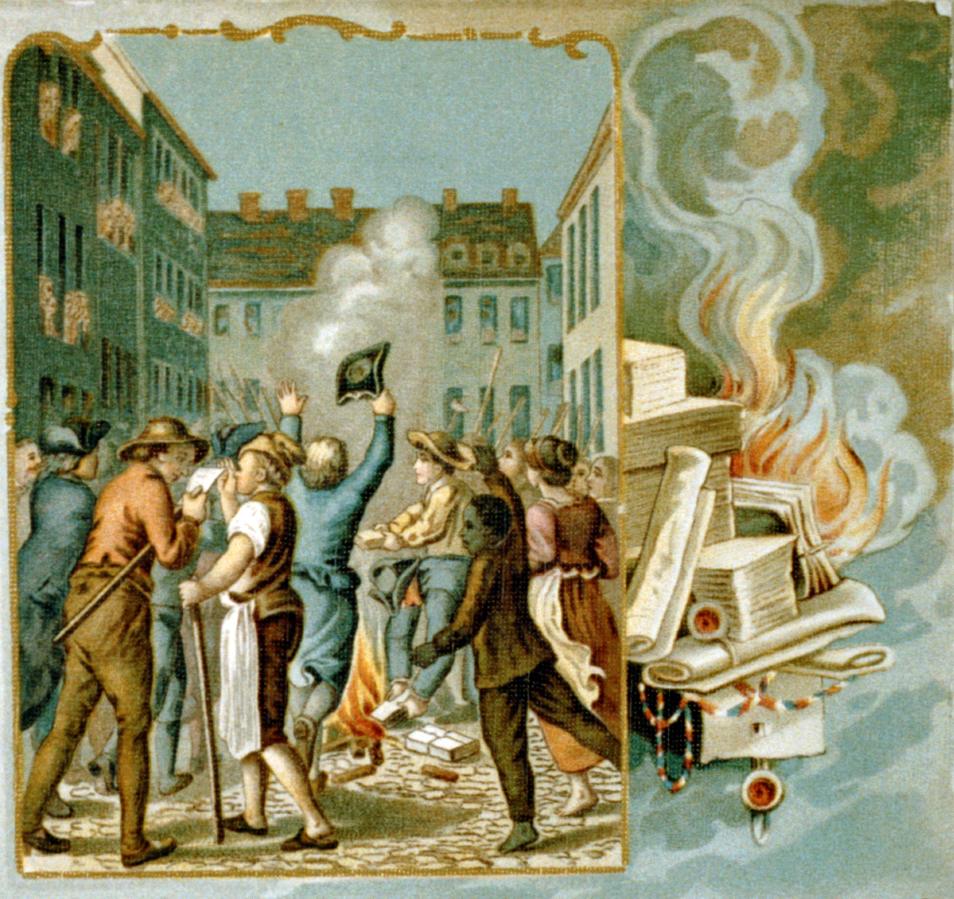

The British Parliament passed the Stamp Act on 22 March 1765. The Act imposed a tax on legal and commercial paperwork as well as on newspapers and other distributed writings. It was intended to raise revenue for war debts by a tax that colonists could not avoid. The colonial legislatures were given no say in this tax, and offenders could be tried in courts of Admiralty, without rights to a jury or witnesses.
These taxes were imposed only on the British subjects in the North American colonies and not on other British subjects, which effectively treated the colonists as second class citizens. The American Colonies were not represented in Parliament, and they declared it to be unconstitutional for such taxes to be imposed on them without their consent or the consent of their representatives. “No taxation without representation” is a phrase we have all heard which reflects the battle they faced.
The treatment the Founders suffered, at the hands of a government they had no say in, became the major issue that drove the American Revolution. Even those who sought peace with England until the very end, had to acknowledge that returning to peace with King and Parliament would mean bowing down to any tax or restriction they might choose to put on the colonies.
Our right to self-govern has been abdicated by many current citizens who have become too lazy or too ignorant to do the hard work of keeping our public functionaries in line. When citizens abdicate government actors are only too willing to take control.
Are you going to your municipal meetings?
Together we can make 2026 the Tipping Point where America returns to the Fundamental Principles of Liberty and Self-governance that made it great.
Leave a Reply
You must be logged in to post a comment.