Tag: Road to Independence

  • Who Did The Colonists Fight the American Revolution For

    Who Did The Colonists Fight the American Revolution For

    Share:


    Patrick Henry, one of the most well-known of our Founding Fathers, recognized early on what was at issue with British rule in the colonies.

    In the 1763 Parson’s Cause dispute, Henry outlined the limits of King and Parliament’s authority in the colonies and the right to self-rule.

    When the Stamp act was passed in 1765, Henry proposed five resolutions in the House of Burgess that affirmatively declared the right of the colonies to self-govern, and the limits of King and Parliament.

    As things with England deteriorated over the next decade, Patrick Henry continued to be outspoken about the rights of the colonists being abused by British government. When things in Boston and throughout the northeast were reaching crisis in 1775, the Second Virginia Convention met. Patrick Henry proposed a plan of military preparedness for the inevitable war ahead.

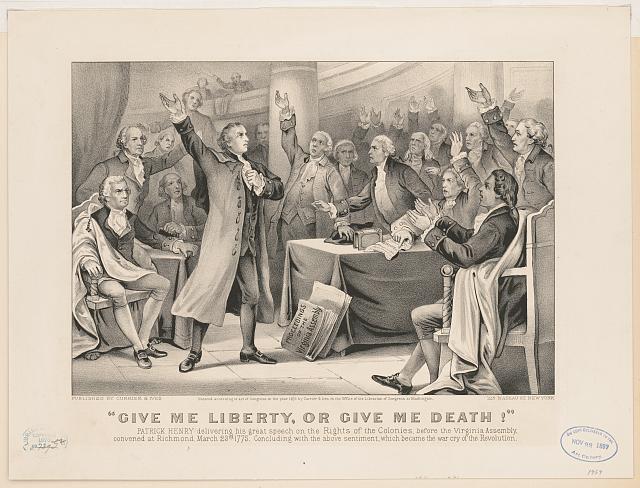
    Henry’s foresight was met with pushback by those who wanted to hold out for a peaceful resolution to the conflict with England. It is at this juncture that Patrick Henry’s famous “Give me liberty or give me death” speech swayed the majority and helped prepare Virginia for what followed shortly thereafter. It is arguably the tipping point where all of the colonies started to become resolute in their preparations for the war ahead.

    Patrick Henry’s call to support the other colonies under attack by the British demonstrates the understanding that he had that they must fight for each other if any of them were going to succeed.

    “The war is actually begun! The next gale that sweeps from the north will bring to our ears the clash of resounding arms! Our brethren are already in the field! Why stand we here idle?”

    If we are to succeed in our cause to bring liberty back to these united States, we must be mindful that we are fighting for all our fellow Citizens and for our posterity. And we need to understand that we must be active now; to delay may be too late.

    Patrick Henry gave his historic speech at Saint John’s Church on March 23, 1775.

    “Why stand we here idle? What is it that gentlemen wish? What would they have? Is life so dear, or peace so sweet, as to be purchased at the price of chains and slavery? Forbid it, Almighty God! I know not what course others may take; but as for me, give me liberty or give me death!”

    Will you join us?

    “But pardon me, my fellow citizens, I know you want not zeal or fortitude. You will maintain your rights or perish in the generous struggle. However, difficult the combat, you never will decline it when freedom is the prize.”

    Dr. Joseph Warren, Boston, 6 March 1775

    Read Patrick Henry’s famous speech, as reported by William Wirt. Delivered at the Second Virginia Convention, 23 March 1775.

  • What Taxes Are We Okay With?

    What Taxes Are We Okay With?

    Share:


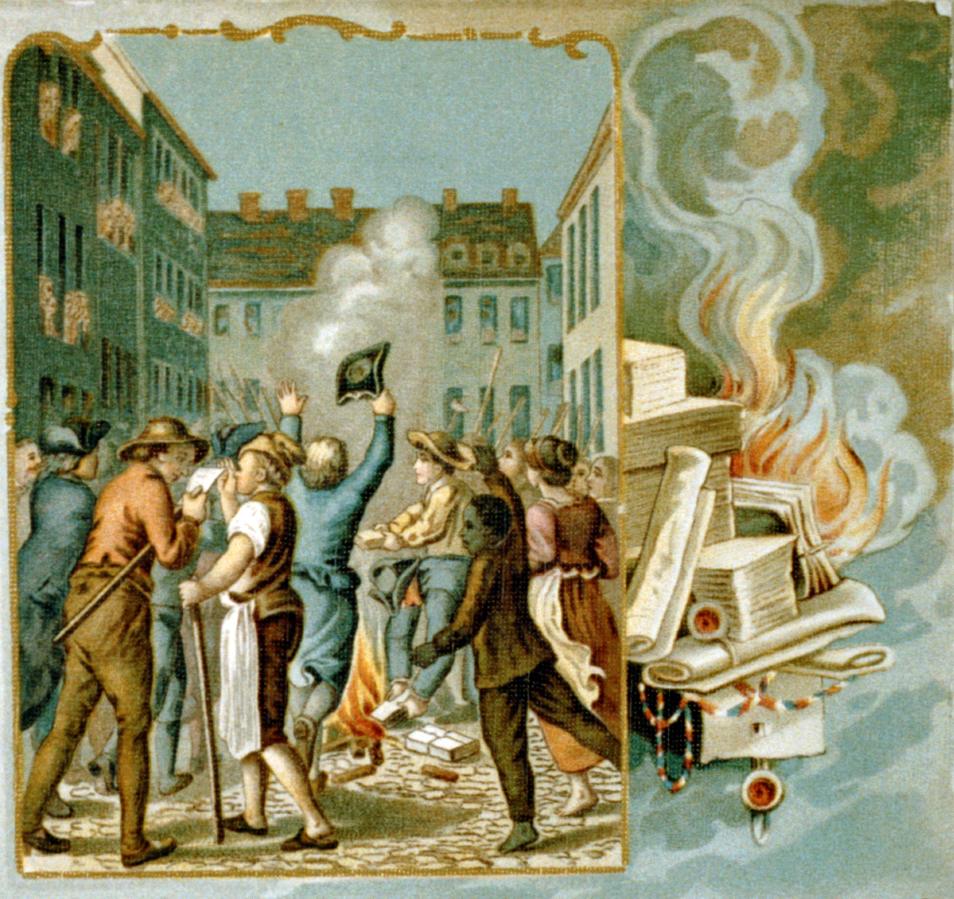
    The British Parliament passed the Stamp Act on 22 March 1765. The Act imposed a tax on legal and commercial paperwork as well as on newspapers and other distributed writings. It was intended to raise revenue for war debts by a tax that colonists could not avoid. The colonial legislatures were given no say in this tax, and offenders could be tried in courts of Admiralty, without rights to a jury or witnesses.

    These taxes were imposed only on the British subjects in the North American colonies and not on other British subjects, which effectively treated the colonists as second class citizens. The American Colonies were not represented in Parliament, and they declared it to be unconstitutional for such taxes to be imposed on them without their consent or the consent of their representatives. “No taxation without representation” is a phrase we have all heard which reflects the battle they faced.

    The treatment the Founders suffered, at the hands of a government they had no say in, became the major issue that drove the American Revolution. Even those who sought peace with England until the very end, had to acknowledge that returning to peace with King and Parliament would mean bowing down to any tax or restriction they might choose to put on the colonies.

    Our right to self-govern has been abdicated by many current citizens who have become too lazy or too ignorant to do the hard work of keeping our public functionaries in line. When citizens abdicate government actors are only too willing to take control.

    Are you going to your municipal meetings?

    Together we can make 2026 the Tipping Point where America returns to the Fundamental Principles of Liberty and Self-governance that made it great.

  • What is the Limit of Civil Government Authority?

    What is the Limit of Civil Government Authority?

    Share:


    On March 18th, 1776, the British Parliament was forced to repeal the Stamp Act. But on the same day they passed the Declaratory Act, reasserting their right to legislate for the colonies.

    Both Parliament and the King passed the Declaratory Act. It asserted that they had the “full power and authority to make laws and statutes of sufficient force and validity to bind the colonies and people of America, subjects of the crown of Great Britain, in all cases whatsoever”.

    America’s Founders rejected this Act. The cornerstone principle which our American government is structured around is that every human being has certain inalienable rights endowed upon them by the Creator. The principles built on this foundation are that the purpose of government is to secure these rights and that the government cannot violate these rights without due process of law.

    These bedrock principles apply at every level of government and to every action of government or government actor.

    When your local or State governments violate your rights instead of securing your rights, what do you do about it? Do you know how to petition your public functionaries? Do you attend local municipal meetings? Get organized now and secure your inalienable rights.

    Connect in your State

    Together we can make 2026 the Tipping Point where America returns to the Fundamental Principles of Liberty and Self-governance that made it great.

    Don’t have time? Consider a Financial donation today!

  • 15 November 1777: The Articles of Confederation

    15 November 1777: The Articles of Confederation

    Share:

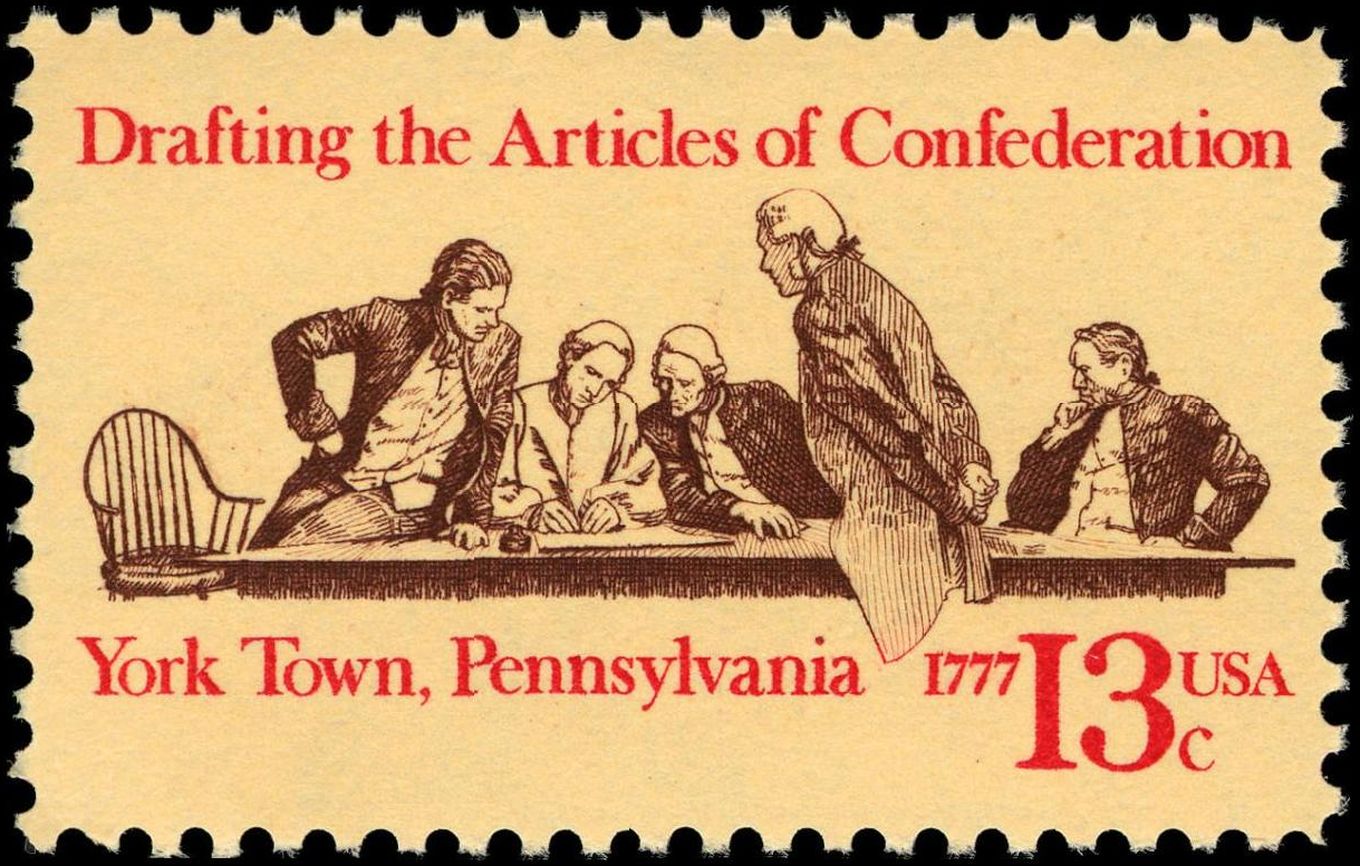
    The Articles of Confederation were adopted by the Second Continental congress on this day in 1777. They were not ratified until March 1, 1781, when Maryland became the last State to ratify.

    In the short period between ratification, the war’s ending, and 1786, relations between States eroded to the point where our Founder’s began calling for a convention to correct the issues in the Articles. In 1787 they succeeded in having a convention. That convention wrote a new Constitution and proposed that it be ratified by State conventions, thereby circumventing the unanimous agreement requirement in the Articles of Confederation for any changes to that constitution. U.S. Constitution was ratified June 21,1788.

    After declaring independence from British rule, the States each became sovereign nation states. But the Founders understood that they needed some unity of action to succeed in their war for independence and their attempts to gain recognition from other countries.

    Previous attempts at unifying the governments in America, such as the Albany Plan, had failed as the various governing powers did not want to lose any authority to any other government. The idea of giving power to a new central government while fighting to achieve independence from the current central government was repugnant to many.

    The Second Continental Congress created a committee of one representative from each colony to create a form that the new “national” government would take. The primary writer of the Articles of Confederation was John Dickinson, a delegate from Delaware. After much debate and alterations, the Articles were adopted by the Second Continental Congress on November 15, 1777.

  • The Continental Military Gets Organized

    The Continental Military Gets Organized

    Share:

    Road to Independence Dateline: 17 June 1775, Philadelphia, Pennsylvania

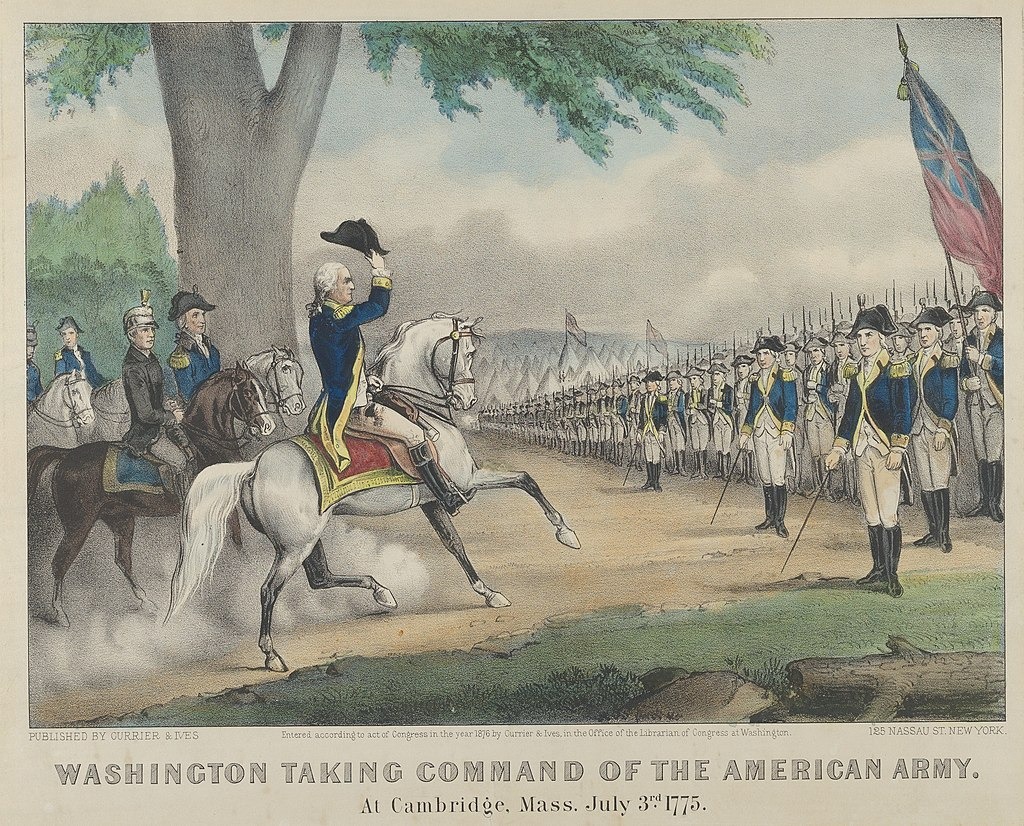
    George Washington was chosen this day to lead the Continental forces against the British.

    Washington’s selection as the Commander & Chief was not a foregone conclusion and there were several others who expected to receive the appointment. However, George Washington’s nomination was unanimously approved by the Continental Congress. A sum of $500 per month was established to pay the Commander & Chief, but Washington refused pay, asking only that his expenses be reimbursed.

    Washington did not seek this position, but he was one of the few men suited for this position; both in military experience and in his place and position as a wealthy Virginia leader. His selection to lead the colonial army, let everyone know that the colonies were behind Massachusetts in its struggle with the king. His steady leadership through the war brought about the impossible victory over the world’s greatest military of the time.

    George Washington received his commission as General and Commander and Chief on June 19, 1775, and resigned it on December 23, 1783 after the war. His willingness to resign from such a powerful position has resonated with Americans for generations.

    See the words of the commission below from the American Battlefield Trust.

    The Continental Congress appoints George Washington as Commander and Chief of the Continental Army:

    Members of Congress convened: 

    The delegates of the United Colonies of New Hampshire, Massachusetts Bay, Rhode Island, Connecticut, New York, New Jersey, Pennsylvania, New Castle Kent and Sussex on Delaware, Maryland, Virginia, North Carolina, and South Carolina

    To George Washington Esquire

    We reposing especial trust and confidence in your patriotism, conduct and fidelity Do by these presents constitute and appoint you to be General and Commander in chief of the army of the United Colonies and of all the forces raised or to be raised by them and of all others who shall voluntarily offer their service and join the said army for the defence of American Liberty and for repelling every hostile invasion thereof And you are hereby vested with full power and authority to act as you shall think for the good and Welfare of the service.

    And we do hereby strictly charge and require all officers and soldiers under your command to be obedient to your orders & diligent in the exercise of their several duties. And we do also enjoin and require you to be careful in executing the great trust reposed in you, by causing strict discipline and order to be observed in the army and that the soldiers are duly exercised and provided with all convenient necessaries.

    And you are to regulate your conduct in every respect by the rules and discipline of war (as herewith given you) and punctually to observe and follow such orders and directions from time to time as you shall receive from this or a future Congress of the said United Colonies or a committee of Congress for that purpose appointed.

    This Commission to continue in force until revoked by this or a future Congress.

    By order of the Congress,

    John Hancock, President

    Learn more: https://www.battlefields.org/learn/primary-sources/washingtons-commission

  • First Offensive of the Revolution

    First Offensive of the Revolution

    Share:

    May 10, 1775

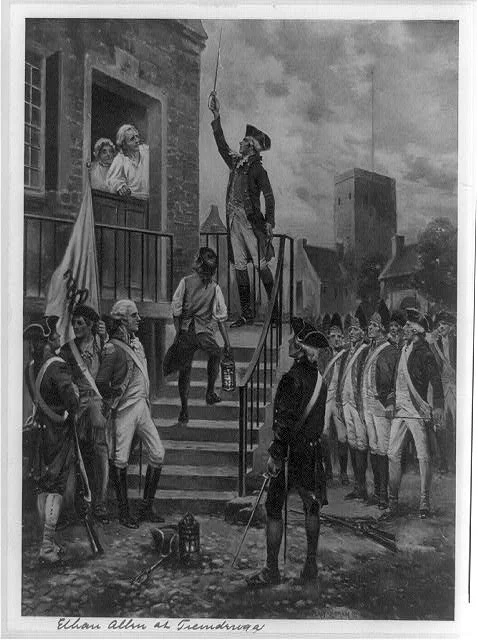
    Benedict Arnold and Ethan Allen, with about 80 men, attack Fort Ticonderoga capturing the British soldiers and the artillery housed there. The fort controls the north/south route between Albany and Montreal over lakes Champlain and George. While this victory meant control of a strong, strategic fort, the more important significance of this victory would not be recognized until nearly a year later.

    After the battles of Lexington and Concord, the militias, and later the Continental Army, surrounded Boston in an effort to contain the British military. General Washington directed General Henry Knox to retrieve the cannons from Fort Ticonderoga at whatever expense it took. Late in January, Knox returned with the cannon and plans were made to reinforce Dorchester Heights overlooking Boston.

    During the night of March 5, 1776, Dorchester Heights was fortified with prebuilt chandeliers and fascines and the cannons brought 200 miles in the dead of winter from Fort Ticonderoga. On March 6, 1776, six years after the Boston massacre, the British awakened to find the Continental Army holding a commanding position over Boston. The British were forced to abandon Boston marking a major victory on the Road to Independence.

    All because a few men succeeded in their fight for Freedom. 


    https://www.battlefields.org/learn/revolutionary-war/battles/fort-ticonderoga-1775

  • The Gunpowder Incident

    The Gunpowder Incident

    Share:

    On April 21, 1775, the people of Virginia were alerted that the royal governor, Lord Dunmore, had removed the gun powder stores from the public powder magazine in Williamsburg, VA during the night and moved it to a ship of the Royal Navy. 

    Thanks to Patrick Henry’s speech to the Second Virginia Convention, militias in Virginia were being readied to defend America from Britain’s imminent attack. Patrick Henry lead his militia to Williamsburg to demand the return of the gunpowder. Militias around Virginia moved on Williamsburg in support of Henry, and they were eventually reimbursed for the cost of the stolen gunpowder.

    Virginia would not have been ready for this emergency had Patrick Henry not made his “Give me Liberty or Give me Death” speech the month before. The question for each of us is, what are we doing to prepare for the upcoming local elections in our area? Have you organized a local Constitution Party affiliate? Have you recruited quality candidates who understand the purpose of government and are prepared to secure our inalienable rights? Do you have the groundwork laid for getting our candidates on the ballot and for getting the votes needed to elect them? Do you have a plan of action for when they get elected? Do you have a long-term plan for electing more and more local CP candidates?

    We must be ready.

    Learn more about THE GUN POWDER INCIDENT here.

  • Shot Heard Around the World

    Shot Heard Around the World

    Share:

    Road to Independence: April 19, 1775

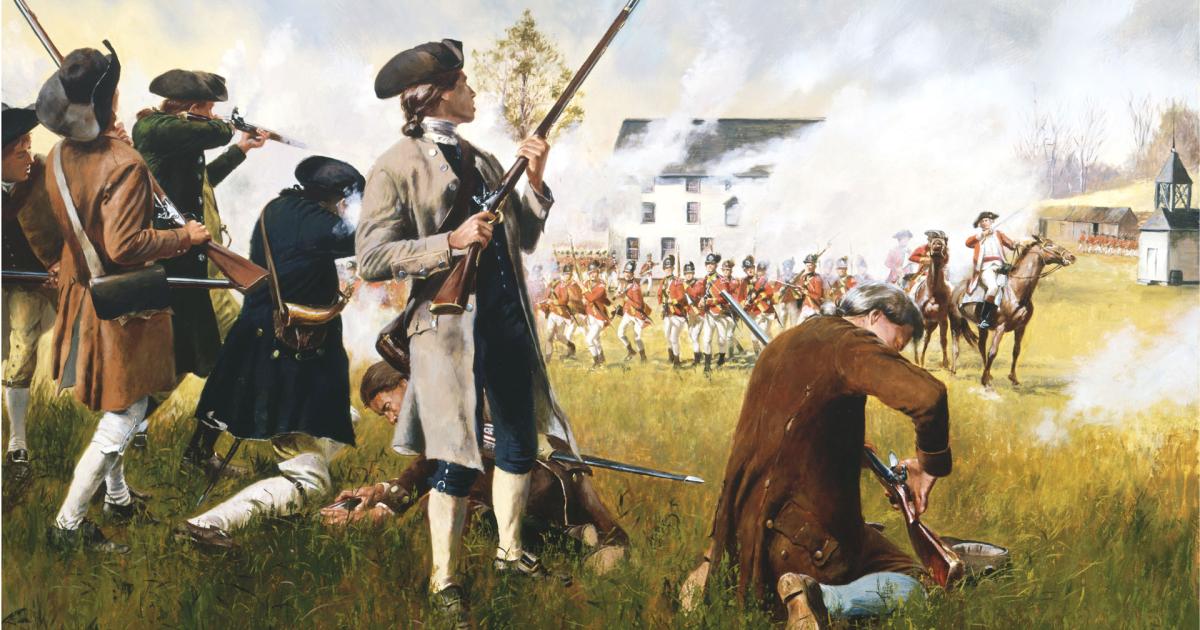
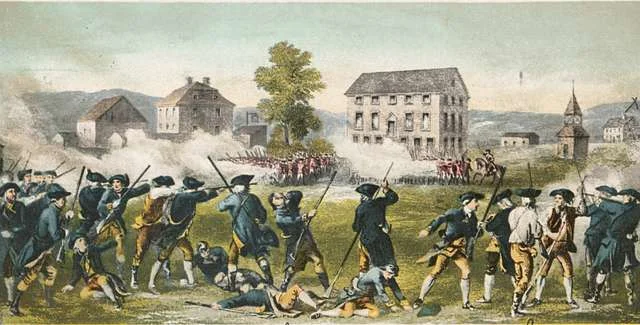
    British Lt. Col. Francis Smith with 700 troops began moving towards Concord, Massachusetts with orders to confiscate the colonist’s arms and powder stockpiled there. A detachment of the light infantry under Major John Pitcairn were met on the green in Lexington by Captain John Parker and around 80 Minutemen in parade formation. Shots were fired, several Minutemen were killed, and the British troops continued on towards Concord.

    The powder and arms in Concord had been moved before the British troops arrived and they went back to Boston empty handed harassed the entire way by the many militias gathering to the cause. This engagement triggered all the militias in the area to turn out, and by the time the British troops made it back to Boston, there were nearly as many militia men surrounding Boston as there were British troops occupying the city.

    The “Shot Heard Round the World” has been recognized as the final straw that launched the American Revolutionary War. Today, our government has become far more oppressive than the British government of that time. It is time for a new American Revolution while there is still a chance for it to be a bloodless revolution.

    What issue is the hill that you would be willing to die on? 

    Concord Hymn

    Ralph Waldo Emerson


    By the rude bridge that arched the flood,
    Their flag to April’s breeze unfurled,
    Here once the embattled farmers stood
    And fired the shot heard round the world.

    The foe long since in silence slept;
    Alike the conqueror silent sleeps;
    And Time the ruined bridge has swept
    Down the dark stream which seaward creeps.

    On this green bank, by this soft stream,
    We set today a votive stone.
    That memory may their deed redeem,
    When, like our sires, our sons are gone.

    Spirit, that made those heroes dare
    To die, and leave their children free,
    Bid Time and Nature gently spare
    The shaft we raise to them and thee.

    Visit the Concord Museum April 19th exhibit online

  • Road to Independence: 23 March 1775

    Road to Independence: 23 March 1775

    Share:

    “Give Me liberty, Or Give Me Death!”

    In the fight for American Independence, few moments were so pivotal as Patrick Henry’s speech on the floor of the Second Virginia Convention on March 23, 1775, at St. John’s Church in Richmond, Virginia. In Massachusetts they had already seen the British strip the colony of its right to self-rule. As things escalated in the north, military preparations were begun, readying for the war that was already being felt. The question in Virginia (where the Royal Governor had previously dissolved the General Assembly for supporting Massachusetts) was whether they would join the northern colonies in preparing for the inevitable war. While many balked at making any such move against England, everyone understood what would happen if every colony waited to face the enemy alone.

    Virginians well knew what England was doing and met at this Second Convention to select delegates to the Second Continental Congress. But the question stood, would they wait too long to commit themselves completely to Liberty, and thereby lose it all? Patrick Henry’s speech, both logical and impassioned, left them all in stunned silence. It was well they listened to Henry and began preparing for the war, as only a month later the Battle of Lexington and Concord and the Gunpowder Incident would be fought.

    Today, I ask each of you what Liberty is worth to you? “Our brethren are already in the field! Why stand we here idle?” You may wait too long if you are not actively engaged in building the Constitution Party locally. Join us now before another month goes by. Lend your support to restoring Liberty.


    give me liberty or give me death

    Patrick Henry


    No man thinks more highly than I do of the patriotism, as well as abilities, of the very worthy gentlemen who have just addressed the House. But different men often see the same subject in different lights; and, therefore, I hope it will not be thought disrespectful to those gentlemen if, entertaining as I do opinions of a character very opposite to theirs, I shall speak forth my sentiments freely and without reserve. This is no time for ceremony. The question before the House is one of awful moment to this country. For my own part, I consider it as nothing less than a question of freedom or slavery; and in proportion to the magnitude of the subject ought to be the freedom of the debate. It is only in this way that we can hope to arrive at truth, and fulfill the great responsibility which we hold to God and our country. Should I keep back my opinions at such a time, through fear of giving offense, I should consider myself as guilty of treason towards my country, and of an act of disloyalty toward the Majesty of Heaven, which I revere above all earthly kings.

    Mr. President, it is natural to man to indulge in the illusions of hope. We are apt to shut our eyes against a painful truth, and listen to the song of that siren till she transforms us into beasts. Is this the part of wise men, engaged in a great and arduous struggle for liberty? Are we disposed to be of the number of those who, having eyes, see not, and, having ears, hear not, the things which so nearly concern their temporal salvation? For my part, whatever anguish of spirit it may cost, I am willing to know the whole truth; to know the worst, and to provide for it.

    I have but one lamp by which my feet are guided, and that is the lamp of experience. I know of no way of judging of the future but by the past. And judging by the past, I wish to know what there has been in the conduct of the British ministry for the last ten years to justify those hopes with which gentlemen have been pleased to solace themselves and the House. Is it that insidious smile with which our petition has been lately received? Trust it not, sir; it will prove a snare to your feet. Suffer not yourselves to be betrayed with a kiss. Ask yourselves how this gracious reception of our petition comports with those warlike preparations which cover our waters and darken our land. Are fleets and armies necessary to a work of love and reconciliation? Have we shown ourselves so unwilling to be reconciled that force must be called in to win back our love? Let us not deceive ourselves, sir. These are the implements of war and subjugation; the last arguments to which kings resort. I ask gentlemen, sir, what means this martial array, if its purpose be not to force us to submission? Can gentlemen assign any other possible motive for it? Has Great Britain any enemy, in this quarter of the world, to call for all this accumulation of navies and armies? No, sir, she has none. They are meant for us: they can be meant for no other. They are sent over to bind and rivet upon us those chains which the British ministry have been so long forging. And what have we to oppose to them? Shall we try argument? Sir, we have been trying that for the last ten years. Have we anything new to offer upon the subject? Nothing. We have held the subject up in every light of which it is capable; but it has been all in vain. Shall we resort to entreaty and humble supplication? What terms shall we find which have not been already exhausted? Let us not, I beseech you, sir, deceive ourselves. Sir, we have done everything that could be done to avert the storm which is now coming on. We have petitioned; we have remonstrated; we have supplicated; we have prostrated ourselves before the throne, and have implored its interposition to arrest the tyrannical hands of the ministry and Parliament. Our petitions have been slighted; our remonstrances have produced additional violence and insult; our supplications have been disregarded; and we have been spurned, with contempt, from the foot of the throne! In vain, after these things, may we indulge the fond hope of peace and reconciliation. There is no longer any room for hope. If we wish to be free– if we mean to preserve inviolate those inestimable privileges for which we have been so long contending–if we mean not basely to abandon the noble struggle in which we have been so long engaged, and which we have pledged ourselves never to abandon until the glorious object of our contest shall be obtained–we must fight! I repeat it, sir, we must fight! An appeal to arms and to the God of hosts is all that is left us!

    They tell us, sir, that we are weak; unable to cope with so formidable an adversary. But when shall we be stronger? Will it be the next week, or the next year? Will it be when we are totally disarmed, and when a British guard shall be stationed in every house? Shall we gather strength by irresolution and inaction? Shall we acquire the means of effectual resistance by lying supinely on our backs and hugging the delusive phantom of hope, until our enemies shall have bound us hand and foot? Sir, we are not weak if we make a proper use of those means which the God of nature hath placed in our power. The millions of people, armed in the holy cause of liberty, and in such a country as that which we possess, are invincible by any force which our enemy can send against us. Besides, sir, we shall not fight our battles alone. There is a just God who presides over the destinies of nations, and who will raise up friends to fight our battles for us. The battle, sir, is not to the strong alone; it is to the vigilant, the active, the brave. Besides, sir, we have no election. If we were base enough to desire it, it is now too late to retire from the contest. There is no retreat but in submission and slavery! Our chains are forged! Their clanking may be heard on the plains of Boston! The war is inevitable–and let it come! I repeat it, sir, let it come.

    It is in vain, sir, to extenuate the matter. Gentlemen may cry, Peace, Peace– but there is no peace. The war is actually begun! The next gale that sweeps from the north will bring to our ears the clash of resounding arms! Our brethren are already in the field! Why stand we here idle? What is it that gentlemen wish? What would they have? Is life so dear, or peace so sweet, as to be purchased at the price of chains and slavery? Forbid it, Almighty God! I know not what course others may take; but as for me, give me liberty or give me death!

  • 6 March 1775:  Dr. Joseph Warren speech

    6 March 1775: Dr. Joseph Warren speech

    Share:

    Our Country is in danger but not to be despaired of . . .

    That personal freedom is the natural right of every man; and that property, or an exclusive right to dispose of what he has honestly acquired by his own labour, necessarily arises therefrom, are truths which common sense has placed beyond the reach of contradiction.

    And no man, or body of man, can without being guilty of flagrant injustice, claim a right to dispose of the persons or acquisitions of any other man, or body of men, unless it can be proved that such a right has arisen from some compact between the parties in which it has been explicitly and freely granted.

    Dr. Joseph Warren

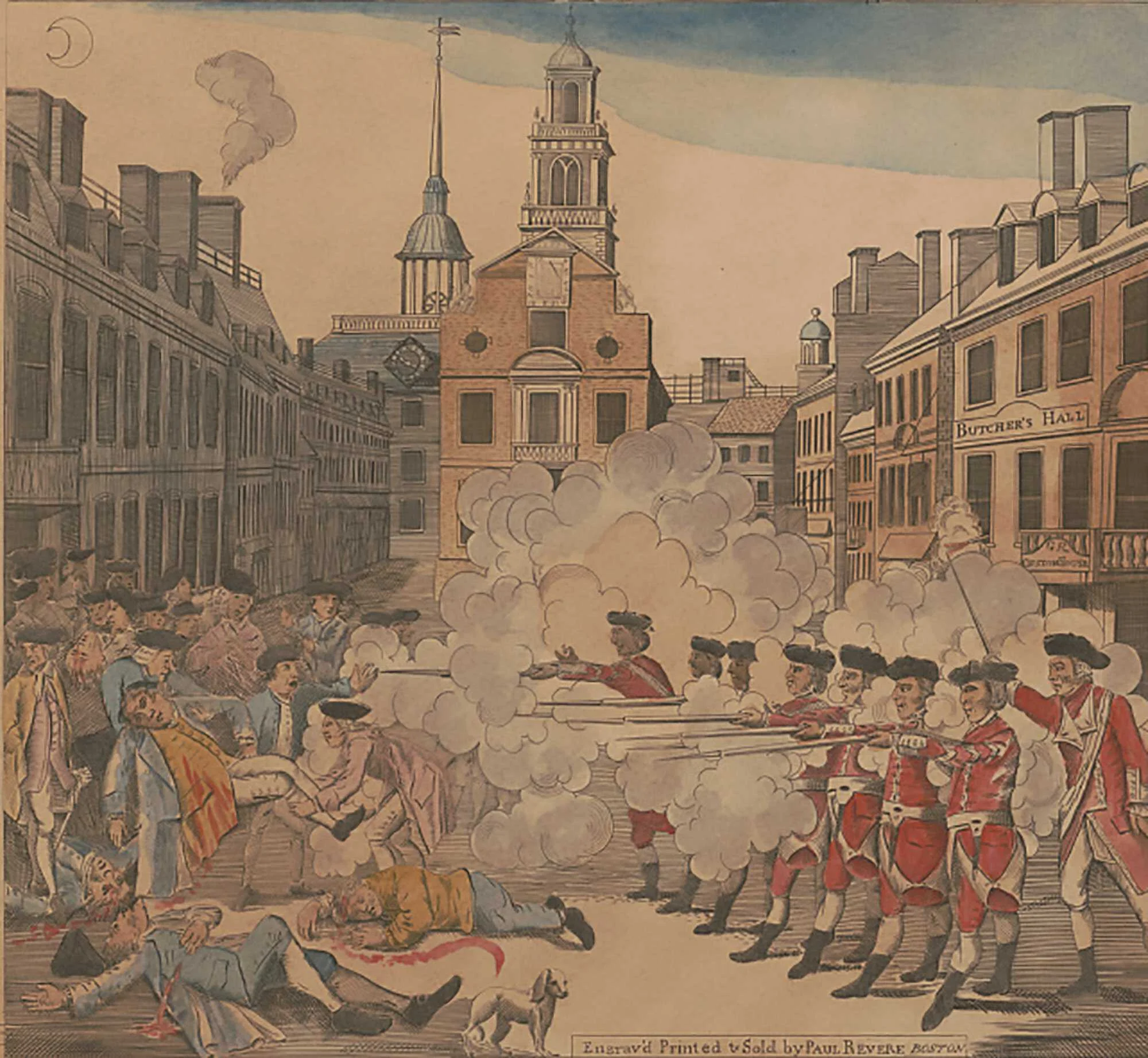
    Dr. Joseph Warren, in 1775, spoke these words on the events of the Boston Massacre that had occurred five years before. He spoke of the invasion of a standing army in times of peace and the death and suffering caused by it. He spoke of the Natural Rights of every colonist and their right to defend themselves and their posterity. He applauded those who sacrificed themselves and their money for a cause that was barely underway yet.

    You then, who nobly have espoused your country’s cause, who generously have sacrificed wealth and ease; who had despised the pomp and shew of tinseled greatness; refused the summons to the festive board; been deaf to the alluring calls of luxury and mirth; who have forsaken the downy pillow to keep your vigils by the midnight lamp, for the salvation of your invaded county, that you might break the fowler’s snare, and disappoint the vulture of his prey, you then will reap that harvest of renown which you so justly have deserved.

    Your country shall pay her grateful tribute of applause. Even the children of your most inveterate enemies, ashamed to tell from whom they sprang, while they in secret, curse their stupid, cruel parents, shall join the general voice of gratitude to those who broke the fetters which their fathers forged.

    Dr. Joseph Warren

    We now have the same issue of tyrannical government trampling our rights. But we also have those who have committed themselves and their fortunes to the fight. We have those who have looked past the struggles ahead to the freedom to be gained for us all.

    Having redeemed your country, and secured the blessing to future generations, who, fired by your example, shall emulate your virtues, and learn from you the heavenly art of making millions happy; with heart felt joy, which transports all your own, you cry, the glorious work is done. Then drop the mantle to some young Elisha and take your seats with kindred spirits in your native skies.

    Dr. Joseph Warren

    Read the full speech of Dr. Joseph Warren Delivered at Boston on 6 March 1775: Patriot Joseph Warren’s 1775 Boston Massacre Oration in full text