Tag: Road to Independence

  • Remembering those who gave everything

    Remembering those who gave everything

    Share:

    Thomas Jefferson: “What country can preserve its liberties if their rulers are not warned from time to time that their people preserve the spirit of resistance? …The tree of liberty must be refreshed from time to time with the blood of patriots and tyrants.”


    Captain Nathan Hale

    There are many who gave their life in the American Revolution. One who met his demise in 1776 was Captain Nathan Hale. Hale was a schoolmaster who served with the militia during the early years of the war. When Washington needed information about Long Island, he requested several spies go behind enemy lines to obtain the information.

    One of the volunteers who went on the spy mission for Washington was Captain Hale. During his time behind enemy lines, Hale was captured and sentenced to hang as a spy. It was reported that immediately prior to his hanging Hale said, “I only regret that I have but one life to lose for my country.”


    April 19, 1775

    British Regulars arrive at the green in Lexington to find militia standing across the green in parade formation in protest of the Regulars’ mission to confiscate guns and ammunition. When the militia began to withdraw from the field, shots were fired and men died.

    Lexington Casualties: John Brown, Samuel Hadley, Caleb Harrington, Jonathan Harrington, Robert Munroe, Isaac Muzzey, Asahel Porter, and Jonas Parker.

    Dr. Joseph Warren

    Dr. Warren was an early supporter of independence working alongside the Sons of Liberty. Besides maintaining his medical practice, he worked to build up the militia and prepare it for the upcoming war. He worked with a spy network and received the information that British Regulars were going to arrest John Hancock and John Adams and march on Concord and sent Revere and Dawes out on their midnight rides.

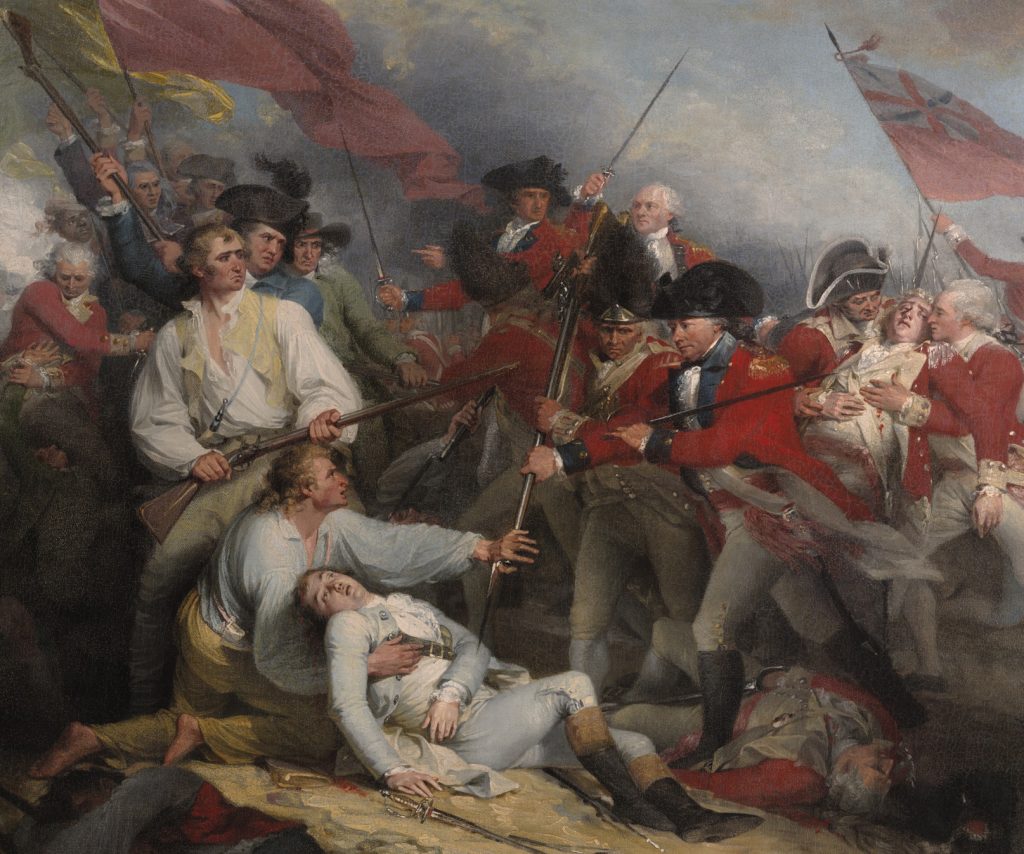
    Dr. Warren joined with the militia in chasing and hounding the Regulars back to Boston and was appointed Major General by the Massachusetts Provincial Congress. Dr. Warren was killed during the final attack on Breeds Hill.

    Apart from his militia and medical work and his work with the spy ring, Dr. Warren was also elected President of 2nd Massachusetts Provincial Congress and served on the Massachusetts Committee of Safety. Dr. Warren wrote the Suffolk Resolves and was well-known for his speech on the anniversary of the Boston Massacre.

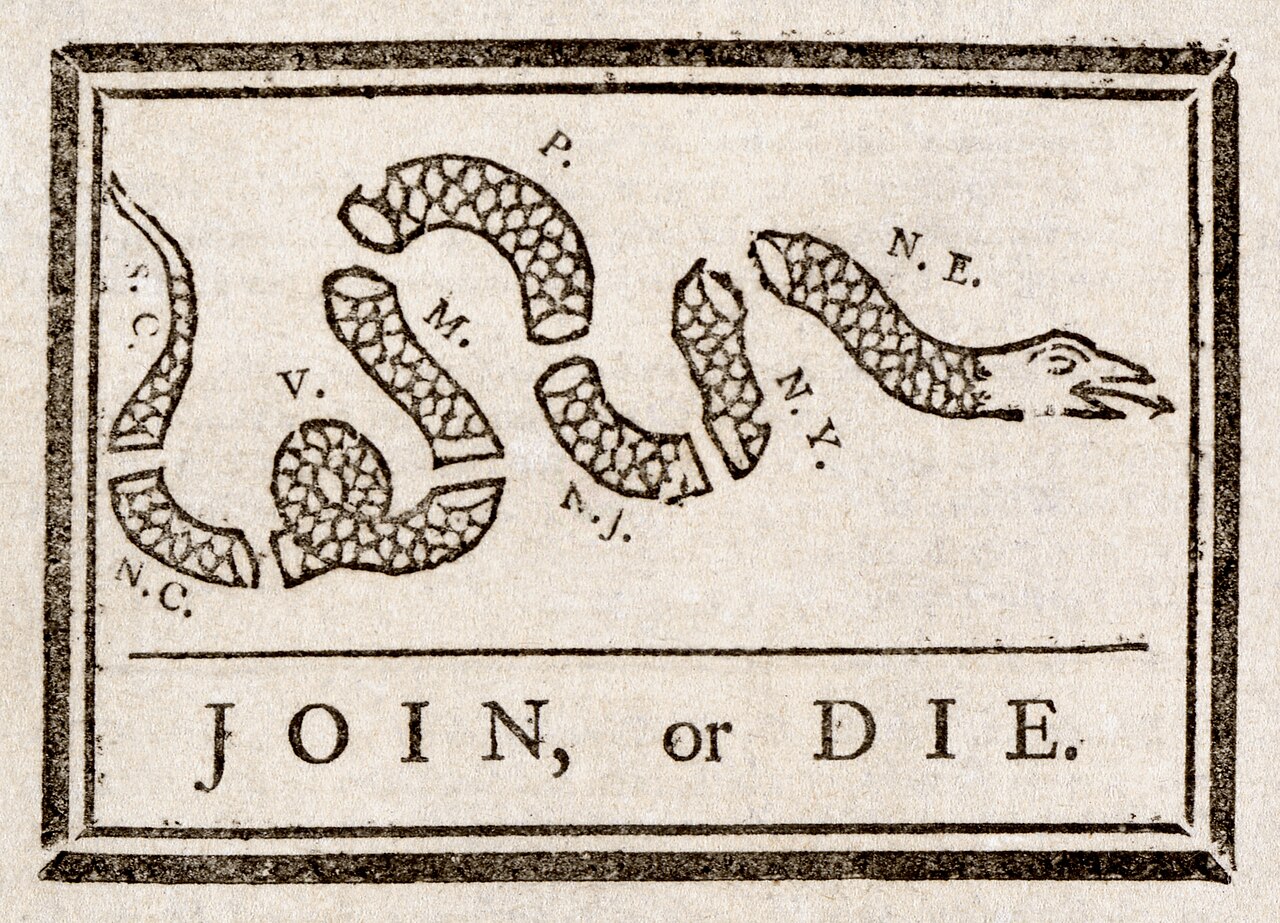
    “We must, indeed, all hang together or, most assuredly, we shall all hang separately.”

    Benjamin Franklin

  • The Escalating War on Conservatives

    The Escalating War on Conservatives

    Share:


    “If ever the Time should come, when vain & aspiring Men shall possess the highest Seats in Government, our Country will stand in Need of its experienced Patriots to prevent its Ruin.” (Samuel Adams)

    The GOP continues to fracture and bleed as the party continues to drive out conservative politicians and voters. This shift is obvious during the primaries in who the GOP supports and in how much money they spend to defeat the conservative candidates running. Quite often they spend more to defeat the conservative candidate in the primary than they do to defeat their opponents in the general election.

    As this war on conservatism continues, it escalates. We are reminded why Howard Phillips founded the Constitution Party. He started it to be an ark for conservatives when the GOP rejected them.

    In support of that mission, and to encourage others to make the break, the Constitution Party National Committee passed the following Resolution at their recent meeting in Philadelphia on this 250th anniversary of the Declaration of Independence:


    RESOLUTION TO SEPARATE FROM THE TYRANNY OF THE DEMOCRATIC AND REPUBLICAN PARTIES


    Whereas the Democratic and Republican parties have manipulated the political systems in the United States and created a UNIPARTY to gain and maintain power and control over the rights of Citizens to further their own agenda.

    Whereas the UNIPARTY has pitted Citizens against each other for the purposes of fundraising and political theater, disturbing the domestic tranquility of the nation;

    Whereas, the UNIPARTY has consistently put the interests of corporate entities before the rights of the Citizens;

    Whereas the UNIPARTY has made claims of owning our votes and has used psyops to indoctrinate the public into believing that voting for someone not approved by the UNIPARTY is wrong and harmful.

    Whereas the UNIPARTY no longer represents We the People, nor protects our rights;

    Be it Resolved, That we Citizens and Voters are, and have a right to be, free and independent in our voting, that we are absolved from all allegiance to the UNIPARTY, and that all political connection between them and the Citizens and Voters of these united States is, and ought to be, totally dissolved to maintain our constitutional governance.


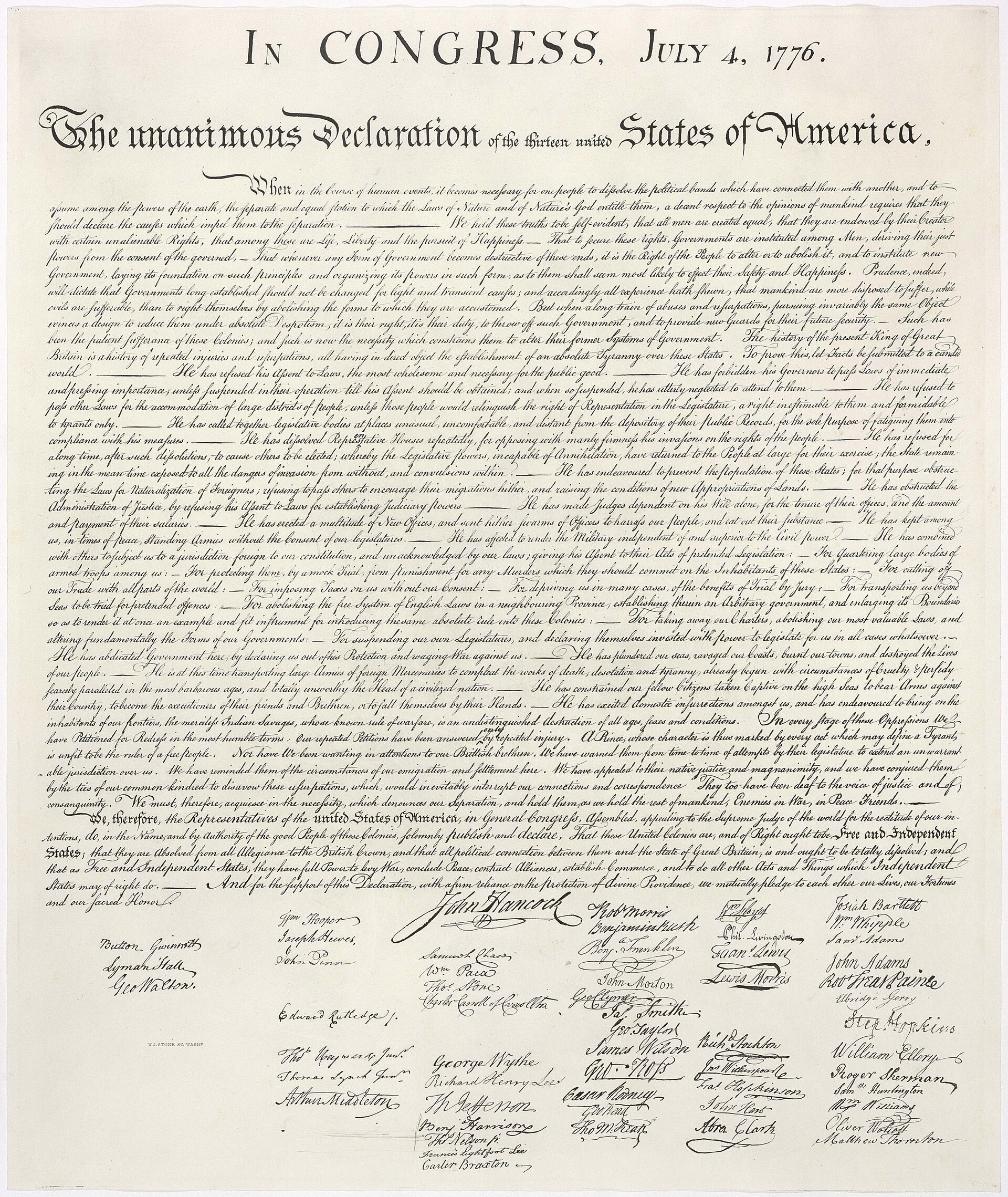
    The Declaration of Independence from the Two-Party System: May 16, 2026

    When, in the course of human events, it becomes necessary for the people of a nation to break free from the political structures that no longer serve them, and to reclaim their rightful power as citizens, respect for the opinions of the Nation demands that they explain why.

    We hold these truths to be self-evident: that all people are created equal; that they are endowed by their Creator with certain inalienable rights — including life, liberty, and the pursuit of happiness. That governments, and the political systems that shape them, exist to protect these rights, deriving their just power from the consent of the governed. That whenever a political system becomes corrupt, entrenched, and destructive of these ends, it is the right of the people to alter or abolish it, and to establish new systems that better reflect their needs, values, and hopes.

    Prudence indeed will dictate that political systems long established should not be changed for light or fleeting causes; and experience has shown that people are often more willing to endure frustrations and disappointments than to challenge deeply rooted systems. But when a long train of abuses and failures shows a clear pattern of placing party loyalty, corporate interests, and political survival over the rights of individuals, it is the right — it is the duty — of the people to throw off such systems, and to create new political pathways for their future.

    • They have entrenched a two-party monopoly that stifles competition, suppresses alternative voices, and denies voters meaningful choice.
    • They have fueled bitter polarization, dividing communities, families, and the nation, not for the people’s benefit, but for their own political gain.
    • They have prioritized corporate donors and special interests over the needs of working people, and small businesses.
    • They have acted unconstitutionally on unsubstantiated threats like climate change, economic inequality, healthcare access, and gun violence, to limit individual freedom.
    • They have undermined trust in our republican form of government by gerrymandering, facilitating voter fraud, and introducing reforms like ranked-choice voting and campaign finance fraud.
    • They have made performative gestures while avoiding meaningful structural change, focusing on political point-scoring instead of solving problems.
    • They have weaponized fear, misinformation, and media echo chambers to manipulate public opinion and cling to power.
    • They have made it nearly impossible for independent or third-party candidates to compete on a level playing field, locking the system to their advantage.

    We have called upon them, time and again, to reform — to open the political process, to listen to the voices of the people, to place country over party. But they have responded with gridlock, empty promises, or further entrenchment. A political establishment that refuses accountability and change is no longer fit to lead a free people.

    We, therefore, the independent citizens of the United States, do solemnly declare that we are free and independent from the Democratic and Republican Parties — that we do not recognize any monopoly they think they have over our lives; that we claim the right to build new parties and movements, to support independent candidates, and to restore our republic to truly reflect constitutional principles.

    And for the support of this declaration, with firm reliance on the principles of justice, equality, and self-determination, we mutually pledge to each other our time, our energy, and our unwavering commitment to a better future.

    Declaration of Independence from the Two-Party System (PDF)

  • Reflecting on the Spirit of America

    Reflecting on the Spirit of America

    Share:


    Throughout this 250th Anniversary year, we challenge everyone to consider those who founded this country. Take a deep look; not just at the famous founders, but at the everyday men and women who made this country. There were folks working at every level of government to bring about this new understanding and new form of government.

    These folks were independent and strong, deciding their future and making it happen. They literally carved new communities out of forest and wilderness. They started new businesses and discovered new resources. They aided each other and supported community.

    Even those in States that were not of the original thirteen have their stories of the original settlors. Stories of self-reliance and resilience as they carved out large permanent communities in the rugged wilderness. Stories of heroes of self-governance and of the journey to Statehood.

    We challenge you to look for these stories (they should be easy to find this year) and to take courage and inspiration from their journeys. We challenge you to look openly and honestly at our history and to learn from past mistakes. And above all, we challenge you to look at the things that made us a beacon of Liberty and Freedom and that created the phenomenon of the American Dream.

  • CP Chairman Magill to participate in Virtual Town Hall “Real Solutions for Broken Government

    Share:

    On Thursday May 7th at 5PM Eastern Stu Strumwasser (author of “A Real Collusion”) will moderate a 90-minute virtual town hall discussion on, “Real Solutions For Broken Government.”

    Panelists include leading members of the independent and third-party political movement, including John Opdycke, Founder & President of Open Primaries; Adam Brandon, Sr. Advisor of The Independent Center; Chris Life, President of United Independents; Justin Magill, Chairman of the Constitution Party; and Sarah Whitman, a social media influencer who focuses on political reform.

    Registration is free and open to the public at:

    To register in ten seconds, please click HERE or visit: www.bit.ly/ARCTownHall

    Topics will include (but not be limited to)

    • how the current two-party system is broken
    • how a novel can be a roadmap for political reform
    • how we got here
    • the very reasonable, real-world improvements we can implement
    • how the many fragmented organizations working for change can collaborate

    The Democratic and Republican parties only count 54% of Americans as members, yet they control 99.6% of Congress. This panel discussion is a must for anyone interested in seeing that change and our government again become more functional in representing all Americans.

    A Real Collusion was released in April 2026. Order the EBook for only $5.99 on Amazon: https://www.amazon.com/dp/B0G5K3BJ1K or learn more at www.arealcollusion.com.

    “A work of original and deftly crafted fiction that will resonate with readers aware of the politics of today in the real world, A Real Collusion is an especially and unreservedly recommended pick.” -Midwest Book Review

    #ARealCollusion #EndTheTwoPartySystem #MakeTheBreak

  • Who Did The Colonists Fight the American Revolution For

    Who Did The Colonists Fight the American Revolution For

    Share:


    Patrick Henry, one of the most well-known of our Founding Fathers, recognized early on what was at issue with British rule in the colonies.

    In the 1763 Parson’s Cause dispute, Henry outlined the limits of King and Parliament’s authority in the colonies and the right to self-rule.

    When the Stamp act was passed in 1765, Henry proposed five resolutions in the House of Burgess that affirmatively declared the right of the colonies to self-govern, and the limits of King and Parliament.

    As things with England deteriorated over the next decade, Patrick Henry continued to be outspoken about the rights of the colonists being abused by British government. When things in Boston and throughout the northeast were reaching crisis in 1775, the Second Virginia Convention met. Patrick Henry proposed a plan of military preparedness for the inevitable war ahead.

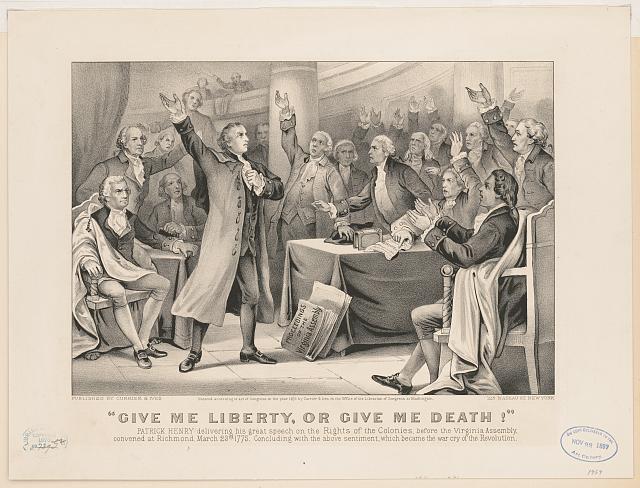
    Henry’s foresight was met with pushback by those who wanted to hold out for a peaceful resolution to the conflict with England. It is at this juncture that Patrick Henry’s famous “Give me liberty or give me death” speech swayed the majority and helped prepare Virginia for what followed shortly thereafter. It is arguably the tipping point where all of the colonies started to become resolute in their preparations for the war ahead.

    Patrick Henry’s call to support the other colonies under attack by the British demonstrates the understanding that he had that they must fight for each other if any of them were going to succeed.

    “The war is actually begun! The next gale that sweeps from the north will bring to our ears the clash of resounding arms! Our brethren are already in the field! Why stand we here idle?”

    If we are to succeed in our cause to bring liberty back to these united States, we must be mindful that we are fighting for all our fellow Citizens and for our posterity. And we need to understand that we must be active now; to delay may be too late.

    Patrick Henry gave his historic speech at Saint John’s Church on March 23, 1775.

    “Why stand we here idle? What is it that gentlemen wish? What would they have? Is life so dear, or peace so sweet, as to be purchased at the price of chains and slavery? Forbid it, Almighty God! I know not what course others may take; but as for me, give me liberty or give me death!”

    Will you join us?

    “But pardon me, my fellow citizens, I know you want not zeal or fortitude. You will maintain your rights or perish in the generous struggle. However, difficult the combat, you never will decline it when freedom is the prize.”

    Dr. Joseph Warren, Boston, 6 March 1775

    Read Patrick Henry’s famous speech, as reported by William Wirt. Delivered at the Second Virginia Convention, 23 March 1775.

  • What Taxes Are We Okay With?

    What Taxes Are We Okay With?

    Share:


    The British Parliament passed the Stamp Act on 22 March 1765. The Act imposed a tax on legal and commercial paperwork as well as on newspapers and other distributed writings. It was intended to raise revenue for war debts by a tax that colonists could not avoid. The colonial legislatures were given no say in this tax, and offenders could be tried in courts of Admiralty, without rights to a jury or witnesses.

    These taxes were imposed only on the British subjects in the North American colonies and not on other British subjects, which effectively treated the colonists as second class citizens. The American Colonies were not represented in Parliament, and they declared it to be unconstitutional for such taxes to be imposed on them without their consent or the consent of their representatives. “No taxation without representation” is a phrase we have all heard which reflects the battle they faced.

    The treatment the Founders suffered, at the hands of a government they had no say in, became the major issue that drove the American Revolution. Even those who sought peace with England until the very end, had to acknowledge that returning to peace with King and Parliament would mean bowing down to any tax or restriction they might choose to put on the colonies.

    Our right to self-govern has been abdicated by many current citizens who have become too lazy or too ignorant to do the hard work of keeping our public functionaries in line. When citizens abdicate government actors are only too willing to take control.

    Are you going to your municipal meetings?

    Together we can make 2026 the Tipping Point where America returns to the Fundamental Principles of Liberty and Self-governance that made it great.

  • What is the Limit of Civil Government Authority?

    What is the Limit of Civil Government Authority?

    Share:


    On March 18th, 1776, the British Parliament was forced to repeal the Stamp Act. But on the same day they passed the Declaratory Act, reasserting their right to legislate for the colonies.

    Both Parliament and the King passed the Declaratory Act. It asserted that they had the “full power and authority to make laws and statutes of sufficient force and validity to bind the colonies and people of America, subjects of the crown of Great Britain, in all cases whatsoever”.

    America’s Founders rejected this Act. The cornerstone principle which our American government is structured around is that every human being has certain inalienable rights endowed upon them by the Creator. The principles built on this foundation are that the purpose of government is to secure these rights and that the government cannot violate these rights without due process of law.

    These bedrock principles apply at every level of government and to every action of government or government actor.

    When your local or State governments violate your rights instead of securing your rights, what do you do about it? Do you know how to petition your public functionaries? Do you attend local municipal meetings? Get organized now and secure your inalienable rights.

    Connect in your State

    Together we can make 2026 the Tipping Point where America returns to the Fundamental Principles of Liberty and Self-governance that made it great.

    Don’t have time? Consider a Financial donation today!

  • 15 November 1777: The Articles of Confederation

    15 November 1777: The Articles of Confederation

    Share:

    The Articles of Confederation were adopted by the Second Continental congress on this day in 1777. They were not ratified until March 1, 1781, when Maryland became the last State to ratify.

    In the short period between ratification, the war’s ending, and 1786, relations between States eroded to the point where our Founder’s began calling for a convention to correct the issues in the Articles. In 1787 they succeeded in having a convention. That convention wrote a new Constitution and proposed that it be ratified by State conventions, thereby circumventing the unanimous agreement requirement in the Articles of Confederation for any changes to that constitution. U.S. Constitution was ratified June 21,1788.

    After declaring independence from British rule, the States each became sovereign nation states. But the Founders understood that they needed some unity of action to succeed in their war for independence and their attempts to gain recognition from other countries.

    Previous attempts at unifying the governments in America, such as the Albany Plan, had failed as the various governing powers did not want to lose any authority to any other government. The idea of giving power to a new central government while fighting to achieve independence from the current central government was repugnant to many.

    The Second Continental Congress created a committee of one representative from each colony to create a form that the new “national” government would take. The primary writer of the Articles of Confederation was John Dickinson, a delegate from Delaware. After much debate and alterations, the Articles were adopted by the Second Continental Congress on November 15, 1777.

  • The Continental Military Gets Organized

    The Continental Military Gets Organized

    Share:

    Road to Independence Dateline: 17 June 1775, Philadelphia, Pennsylvania

    George Washington was chosen this day to lead the Continental forces against the British.

    Washington’s selection as the Commander & Chief was not a foregone conclusion and there were several others who expected to receive the appointment. However, George Washington’s nomination was unanimously approved by the Continental Congress. A sum of $500 per month was established to pay the Commander & Chief, but Washington refused pay, asking only that his expenses be reimbursed.

    Washington did not seek this position, but he was one of the few men suited for this position; both in military experience and in his place and position as a wealthy Virginia leader. His selection to lead the colonial army, let everyone know that the colonies were behind Massachusetts in its struggle with the king. His steady leadership through the war brought about the impossible victory over the world’s greatest military of the time.

    George Washington received his commission as General and Commander and Chief on June 19, 1775, and resigned it on December 23, 1783 after the war. His willingness to resign from such a powerful position has resonated with Americans for generations.

    See the words of the commission below from the American Battlefield Trust.

    The Continental Congress appoints George Washington as Commander and Chief of the Continental Army:

    Members of Congress convened: 

    The delegates of the United Colonies of New Hampshire, Massachusetts Bay, Rhode Island, Connecticut, New York, New Jersey, Pennsylvania, New Castle Kent and Sussex on Delaware, Maryland, Virginia, North Carolina, and South Carolina

    To George Washington Esquire

    We reposing especial trust and confidence in your patriotism, conduct and fidelity Do by these presents constitute and appoint you to be General and Commander in chief of the army of the United Colonies and of all the forces raised or to be raised by them and of all others who shall voluntarily offer their service and join the said army for the defence of American Liberty and for repelling every hostile invasion thereof And you are hereby vested with full power and authority to act as you shall think for the good and Welfare of the service.

    And we do hereby strictly charge and require all officers and soldiers under your command to be obedient to your orders & diligent in the exercise of their several duties. And we do also enjoin and require you to be careful in executing the great trust reposed in you, by causing strict discipline and order to be observed in the army and that the soldiers are duly exercised and provided with all convenient necessaries.

    And you are to regulate your conduct in every respect by the rules and discipline of war (as herewith given you) and punctually to observe and follow such orders and directions from time to time as you shall receive from this or a future Congress of the said United Colonies or a committee of Congress for that purpose appointed.

    This Commission to continue in force until revoked by this or a future Congress.

    By order of the Congress,

    John Hancock, President

    Learn more: https://www.battlefields.org/learn/primary-sources/washingtons-commission

  • First Offensive of the Revolution

    First Offensive of the Revolution

    Share:

    May 10, 1775

    Benedict Arnold and Ethan Allen, with about 80 men, attack Fort Ticonderoga capturing the British soldiers and the artillery housed there. The fort controls the north/south route between Albany and Montreal over lakes Champlain and George. While this victory meant control of a strong, strategic fort, the more important significance of this victory would not be recognized until nearly a year later.

    After the battles of Lexington and Concord, the militias, and later the Continental Army, surrounded Boston in an effort to contain the British military. General Washington directed General Henry Knox to retrieve the cannons from Fort Ticonderoga at whatever expense it took. Late in January, Knox returned with the cannon and plans were made to reinforce Dorchester Heights overlooking Boston.

    During the night of March 5, 1776, Dorchester Heights was fortified with prebuilt chandeliers and fascines and the cannons brought 200 miles in the dead of winter from Fort Ticonderoga. On March 6, 1776, six years after the Boston massacre, the British awakened to find the Continental Army holding a commanding position over Boston. The British were forced to abandon Boston marking a major victory on the Road to Independence.

    All because a few men succeeded in their fight for Freedom. 


    https://www.battlefields.org/learn/revolutionary-war/battles/fort-ticonderoga-1775