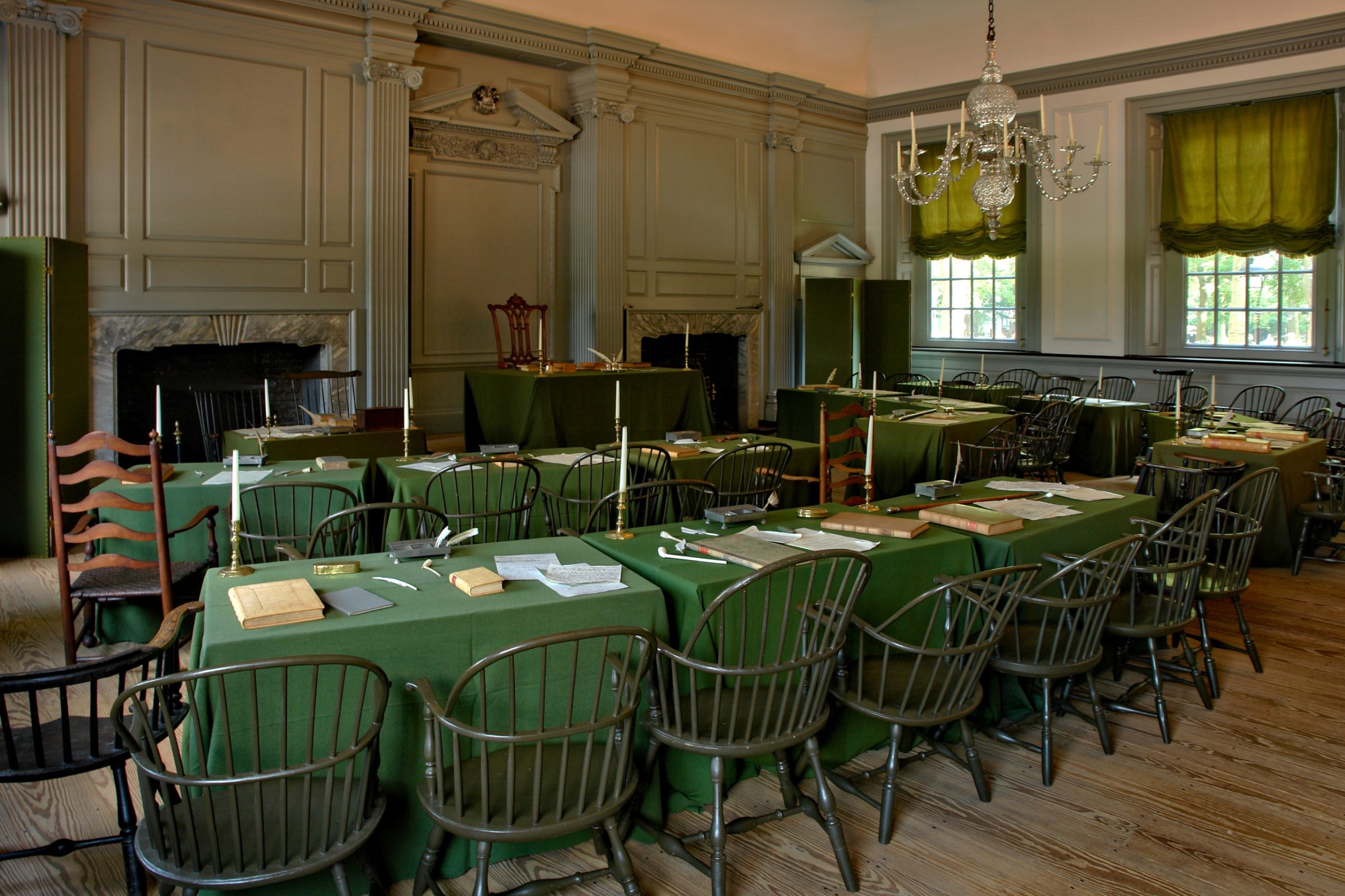

Tag: Independence

  • Constitution Party Rallies Independents and Minor Parties to Turn Their Backs on Unconstitutional Uniparty Politics

    Constitution Party Rallies Independents and Minor Parties to Turn Their Backs on Unconstitutional Uniparty Politics

    This press release will be going out today to many of the national news agencies. We are usually blacklisted by the mainstream media. So, we are asking all of our supporters to send this release on to every news agency that you can get in contact with (large and small, local to national) and to any social media personality that you have connection with. Together we can be heard.


    Lancaster, Pennsylvania – 26 August 2026

    America is in the midst of a major political shift; away from the two old, dying parties, and back into the charge of individuals committed to the principles of self-governance. This is evident in the numbers of viable Independent and independent party candidates and in the pushback seen in municipal and schoolboard meetings.

    The Constitution Party calls upon all Americans of any political persuasion to openly and expressly declare their separation from the Uniparty, and reclaim their independence from the “two-party” political system that has held Americans prisoner. To this end we have proclaimed our own DECLARATION OF INDEPENDENCE FROM THE TWO-PARTY SYSTEM.

    “We have called upon both parties, time and again, to reform — to open the political process, to listen to the voices of the people, to place country over party. But they have responded with gridlock, empty promises, or further entrenchment. A political establishment that refuses accountability and change is no longer fit to lead a free people.

    We, therefore, the independent citizens of the United States, do solemnly declare that we are free and independent from the Democratic and Republican Parties — that we do not recognize any monopoly they think they have over our lives; that we claim the right to build new parties and movements, to support independent candidates, and to restore our republic to truly reflect constitutional principles.

    And for the support of this declaration, with firm reliance on the principles of justice, equality, and self-determination, we mutually pledge to each other our time, our energy, and our unwavering commitment to a better future.”

    We invite voters, members, private organizations and Statesmen to support the open departure of Americans from the Uniparty. Now is the time for decisive action from all Americans!

    Join us by signing our declaration, use our declaration in your own campaign against the Uniparty, or create your own declaration and program to make 2026 the Tipping Point which will bring back true self-governance to America (#2026TippingPoint).

    Download PDF Version: Declaration of Independence from the Two-Party System
  • The First Continental Congress

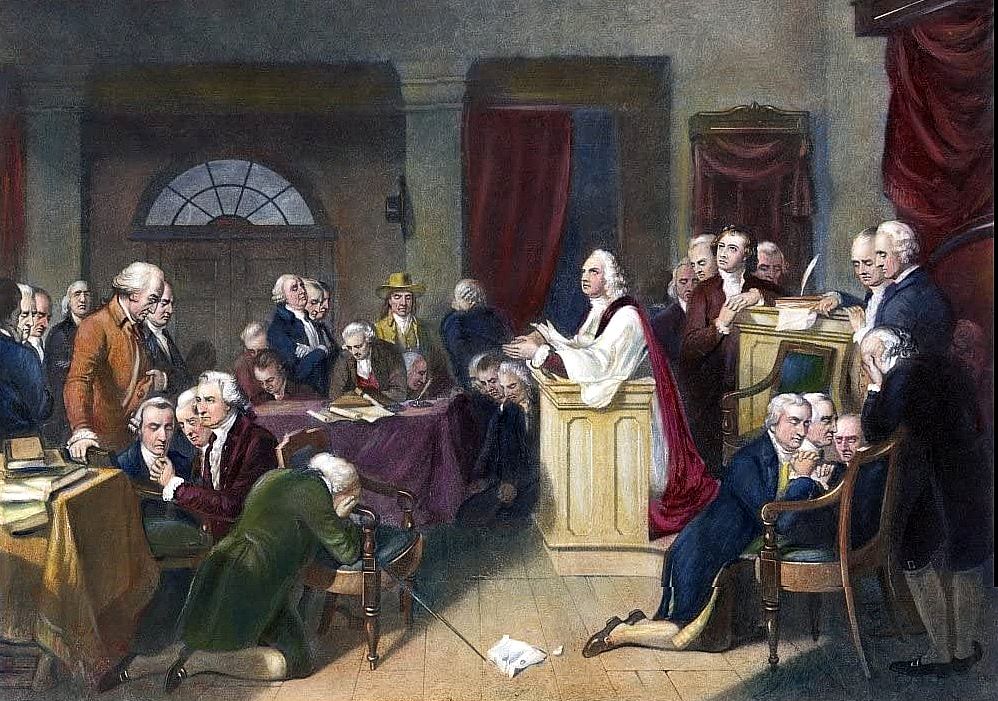
    The First Continental Congress

    The Continental Congress Meets for the First Time

    September 5, 1774

    The delegates to the first Continental Congress met on this date in 1774 with delegates from twelve colonies (Georgia did not send delegates). The colonies established this Congress in response to the Coercive Acts, also known as the “Intolerable Acts”, which targeted Boston. The meeting of the Continental Congress, in Carpenter’s Hall in Philadelphia, was a powerful show of support and of unity in the colonies.

    This first Congress was not intended to be a governing body as they still expected to work things out with the King and continue to be British Colonies. By the agreed upon meeting time of the Second Continental Congress, war had already begun, and the Congress became a de facto national governing body directing war efforts and interacting with foreign powers.

    This body of men, many of whom are well-known to us today, helped to unify the American Colony’s efforts for independence and helped create the structure for the United States to succeed. They struggled and learned, made mistake and had successes, and out of it all they secured the blessings of Liberty for us all.

    I believe there are more instances of the abridgement of freedom of the people by gradual and silent encroachments by those in power than by violent and sudden usurpations.

    James Madison

    Additional reading: John Adams’ notes from the First Continental Congress

  • The Lee Resolutions and the Vote for Independence from Britain

    The Lee Resolutions and the Vote for Independence from Britain


    Road to Independence Dateline: 7 June 1776

    The decision to separate from Britain was a difficult one for young America to make. The long train of abuses and the increasingly oppressive measure from England on one side had to be balanced with the idea of breaking from a much loved mother country that could crush them in a war and leave them in a worse position. Many members of the Continental Congress were unsure about taking such a drastic move. 

    When Richard Henry Lee introduced his resolution on June 7th stating that “that these united colonies are and of right ought to be free and independent states,” there lacked the votes to approve the resolution. Over the month of June, some delegates sought instructions from their States giving them the right to approve the resolution. Some States were divided with some delegates for and some against. By the 2nd of July a compromise was reach to provide for the passage of the Lee resolution. Some delegates who were against it, were absent for the vote allowing their State to vote in favor of it. New York’s delegates abstained from the vote (because they did not feel they could vote in favor of it in the absence of clear direction from their State) allowing the “unanimous” vote required to pass the resolution.

    The Continental Congress had, in anticipation of passing Lee’s resolution, appointed a committee of five to draft the formal declaration to England. Thomas Jefferson of Virginia wrote the first draft of the declaration which was then edited by and with the help of the committee ( John Adams of Massachusetts, Benjamin Franklin of Pennsylvania, Roger Sherman of Connecticut, Robert R. Livingston of New York). The final draft was presented to the Continental Congress on June 28, 1776. Upon the passing of the Lee resolution, the Congress took up the draft of the declaration and the debates and editing lasted until the 4th of July. 

    On July 4, 1776, The Unanimous Declaration of the Thirteen United States of America, was adopted by the Second Continental Congress.

    JOIN THE FIGHT

    SUPPORT THE RESTORATION OF LIBERTY

    Read the whole story at these links:

    How Did It Happen

    Massachusetts History DB

    Drafts of the Declaration of Independence