Category: Messages from the Chairman

  • From the Lyon’s Mouth.  War an Ode.

    From the Lyon’s Mouth. War an Ode.

    Share:


    The Pennsylvania Ledger: Or the Virginia, Maryland, Pennsylvania, & New-Jersey Weekly Advertiser

    Printed by James Humphreys, Jr.

    POET’s CORNER.

    15 June 1776

    From the Lyon’s Mouth.
    WAR an ODE.

    ON all these dreary plains,
    There yet a sorrowing Muse remains,
    Who has seen with weeping eye,
    These former domes of love and joy,
    Happiness, contentment, case,
    And Freedom cloth’d in robes of peace,
    Where the Graces us’d to play,
    Now fallen desolation’s prey;

    With her I’ll view the scene of blood
    And destruction, that pursued
    The tracts of Mars, stern God of war,
    When, riding in his brazen car;
    Drawn by horses swift as wind,
    With all the furies close behind,
    And civil discord in his train
    He took his way o’er heaps of slain.

    First, shrouded in the veil of night,
    To Lexington we’ll take our flight.
    Borne on fancy’s rapid pinions,
    Swift I fly through liquid regions,
    Already do I see the ground
    On which, her brows with cypress bound,
    Britain’s genius mournful view’d
    Her children shed each other’s blood.

    Sudden darkness round is spread,
    Hark! What roaring peals of thunder!
    See the forked lightning fly!
    The bodies of the mighty dead,
    Their icy bands have burst assunder,
    And, in silent majesty,
    Rising from their tomb,
    Stalk along the awful gloom.

    Oh! from this more than deepest night
    Quickly let us take our flight;
    Swift as thought, convey’d through air,
    I stand on Abr’am’s fatal plain,
    Soft pity sheds a tender tear,
    To think how many heroes, slain,
    In the pride of youthful bloom,
    On this spot have found a tomb.

    Ah me! what hosts in dread array
    Towards yonder City bend their way.
    Hark! the angry cannons sound;
    Nought but flame and smoak is seen,
    Streams of blood bedew the ground,
    Alas! how horrid is the scene.

    Here the Son, his Parent’s pride,
    The only comfort of their age,
    On the field all crimson dy’d,
    Feels the Tyrant’s keenest rage,
    Here the bleeding Father lies,
    His Widow’s and his Orphan’s cries
    Assault his dying ear,
    And fills his soul with deep despair.

    Here the Patriot bends beneath
    His wounds all honest on the breast,
    He feels the approaching hand of death,
    And with groaning sinks to rest,
    That eye is clos’d in endless night
    Which late flash’d terror round,
    The arm so terrible in fight
    Now helpless lies upon the ground.

    Here the Lover seeking fame,
    Meets a glorious death;
    While his much lov’d Mistress’s name
    Sounds upon his last breath.
    Be calm, my tortur’d Soul, he cries,
    Ye boisterous winds your raging cease,
    Least my dreary, mournful sighs
    Wound my fair Amanda’s peace.

    But let some gentle breathing Zephyr,
    In the softest, tenderest whisper,
    Convey the tidings to her ear;
    The drop, if she does drop a tear
    Oh! let some little Cherub save,
    And borne on pity’s downy wing,
    The pearly treasure bring,
    And cast it on my grave.

    Most happy men! your troubles cease,
    Your souls are fled to realms of peace;
    Beyond a cruel Monarch’s power,
    In some blest Elysian Bower,
    Where bloody Tyrants ne’er can come;
    Perhaps ye read your Country’s doom.
    Oh! say, will never peace return?
    Ah! are we ever doom’d to mourn?

    Self whisp’ring reason tells me no,
    Our sorrows soon will cease to flow;
    Peace again will bless this shore,
    Smiling Freedom will return,
    And horrid war no more
    Shall cause this land to mourn.
    The Almighty’s self will interpose
    This scene of blood to close.


    Read More:

    Declaration Stories

  • The Committee of Five

    The Committee of Five

    Share:


    “If ever the Time should come, when vain and aspiring Men shall possess the highest Seats in Government, our Country will stand in Need of its experienced Patriots to prevent its Ruin.”

    Samuel Adams

    On June 11, 1776, the Continental Congress selected five men to serve on a committee for drafting a Declaration of Independence in accordance with the resolves proposed by Richard Henry Lee. The Committee of Five, John Adams of Massachusetts, Benjamin Franklin of Pennsylvania, Thomas Jefferson of Virginia, Robert R. Livingston of New York, and Roger Sherman of Connecticut, were chosen for this task.

    The Committee of Five discussed the structure it should follow, then asked Thomas Jefferson, the Virginian, to prepare a draft of the declaration. Thomas Jefferson’s first draft was then discussed and minor edits made by the committee.

    The Committee of Five would present their proposed declaration to the Continental Congress on June 28, 1776.

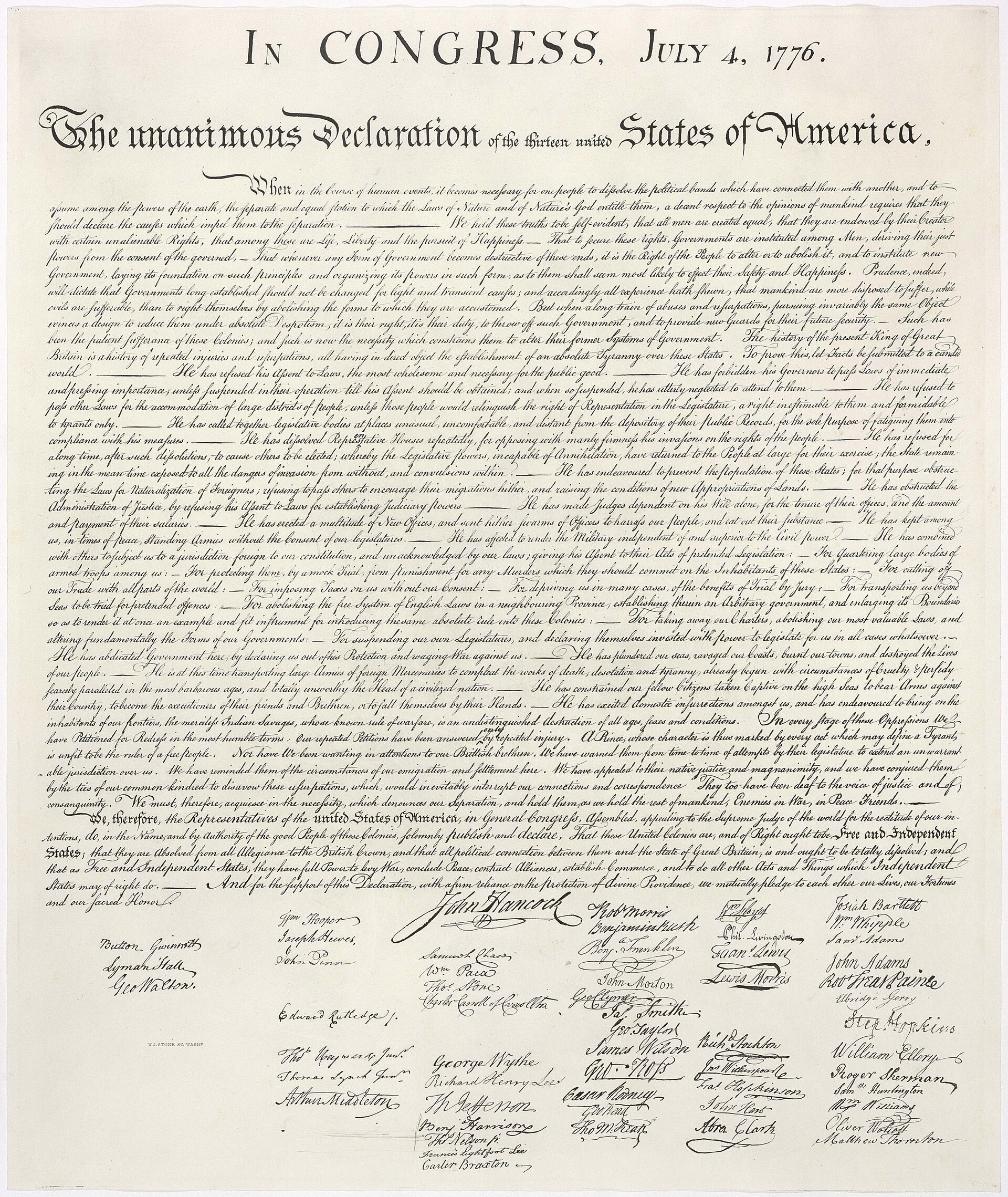
    In Congress, July 4, 1776

  • The Lee Resolves

    The Lee Resolves

    Share:


    “If ever the Time should come, when vain and aspiring Men shall possess the highest Seats in Government, our Country will stand in Need of its experienced Patriots to prevent its Ruin.”

    Samuel Adams

    On June 7, 1776, Richard Henry Lee proposed several resolves in the Continental Congress. These resolves set the stage for the American Colonies to finally separate from Great Britain. And while the Continental Congress did not immediately vote on Lee’s resolves, after some discussion it did move forward with appointing three committees (one for each piece of the resolves) to begin constructing the documents required by the resolves.

    Many delegates to the Continental Congress wanted to correspond with the legislatures that sent them, to get instructions on how to proceed. The delegates were generally agreed that this was the only recourse left to the Colonies, but things needed to proceed in an orderly, legal fashion.

    The resolves by Lee were clear and clean as to independence and as to the next steps to take.

    Resolved, That these United Colonies are, and of right to be, free and independent States, that they are absolved from all allegiance to the British Crown, and that all political connection between them and the State of Great Britain is, and ought to be, totally dissolved.

    That it is expedient forthwith to take the most effectual measures for forming foreign Alliances.

    That a plan of confederation be prepared and transmitted to the respective Colonies for their consideration and approbation.


    16 May 2026, Philadelphia, Pennsylvania

    Resolution to Separate from the Tyranny of the Democratic and Republican Parties

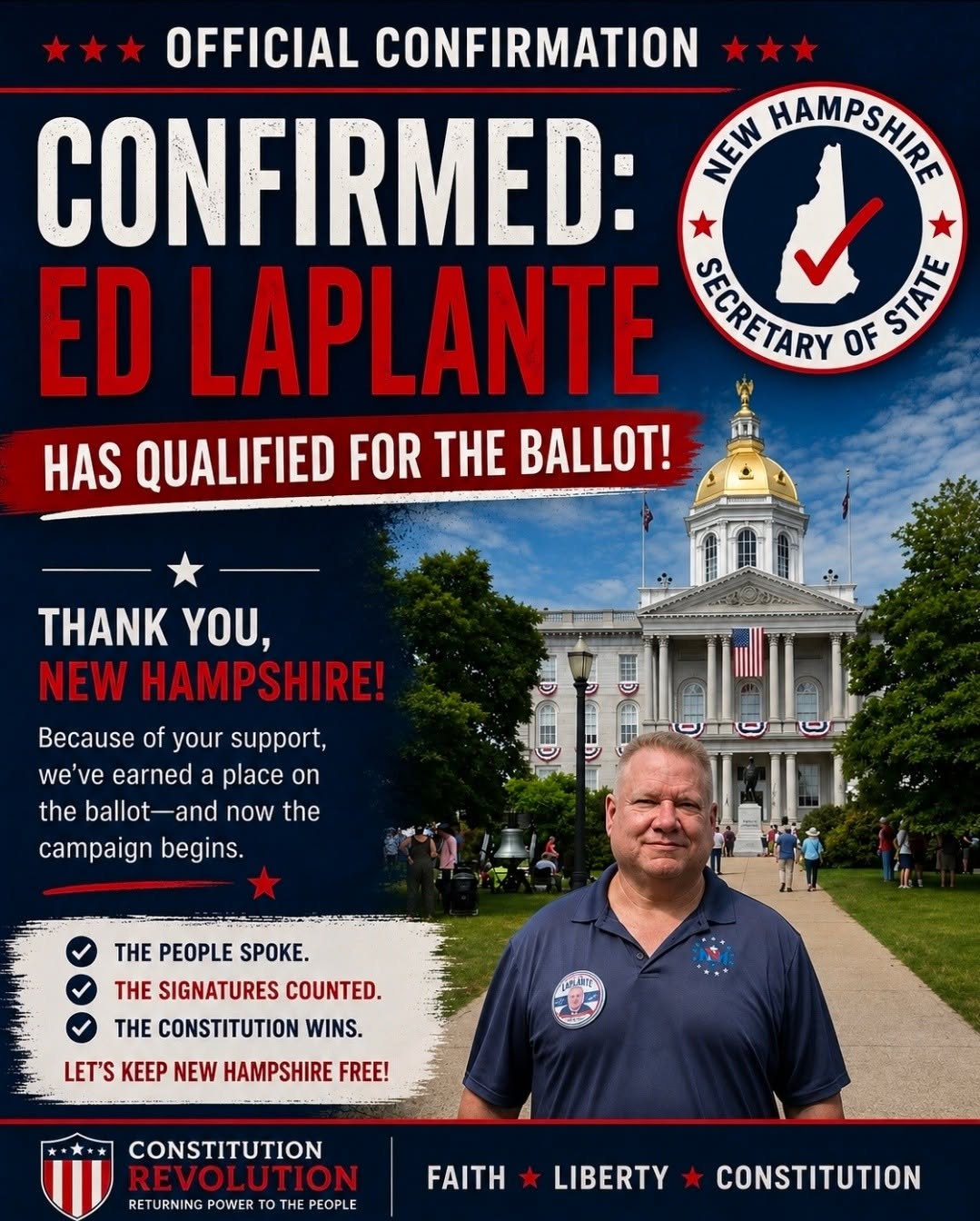
  • Who is Edmond Laplante and Why is The Uniparty so Scared of Him?

    Who is Edmond Laplante and Why is The Uniparty so Scared of Him?

    Share:


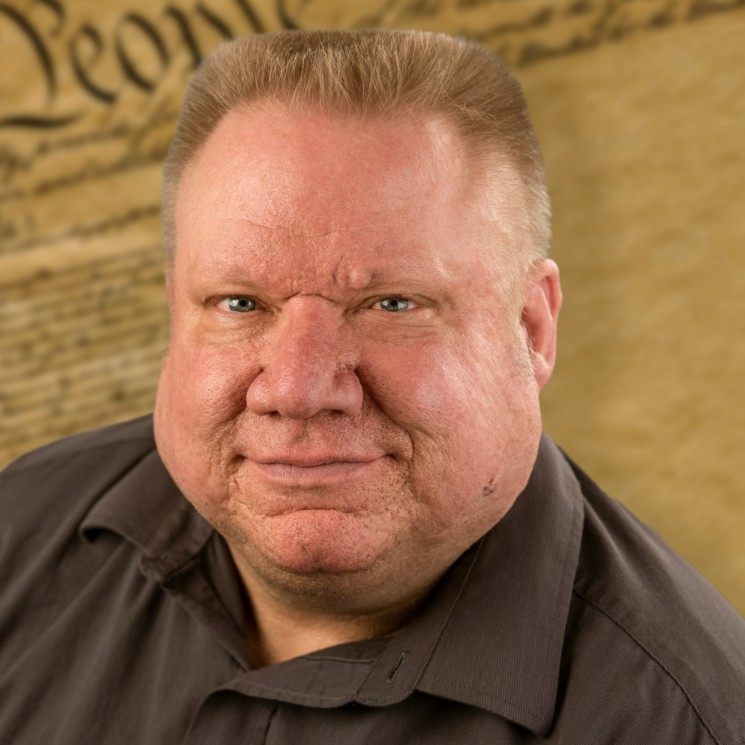
    Edmond Laplante

    Father, Grandfather, Marine.

    Former candidate for both U.S. Senate and Governor of New Hampshire; current School Board Member.

    Candidate for U.S. Senator from New Hampshire


    Edmond Laplante’s Vision, in his own words

    “I’ve been a mechanic for over 40 years. In that time, I’ve worked on just about everything you can imagine – cars, trucks, machinery, and systems of all kinds. One thing experience teaches you quickly is humility: no mechanic knows everything, and no machine should be altered just because someone thinks they have a better idea.

    When you’re dealing with a complex system, you don’t improvise. You respect its design. You consult the manual – not to reinvent it, but to understand its limits, its tolerances, and what it was built to do.

    That’s how I view the Constitution.

    The Constitution is not a tool for politicians to “fix” society, nor a shortcut to impose new ideas. It is a set of restraints – written to limit power, define jurisdiction, and protect the people from those who govern. When government follows it faithfully, things tend to work. When it ignores it, no amount of experience or good intentions can prevent damage.

    Experience matters. But restraint matters more. And a government that respects its limits is far more trustworthy than one that promises to fix everything.”

    So why is the uniparty so afraid of Ed?

    Ed’s campaign is about bringing transparency and accountability to our public functionaries. He wants the people to hold officials to their oath of office and to the Constitution that they have sworn to uphold. This push for a Constitution Revolution, to limit government and return freedom to the people, makes him a danger for the uniparty. The uniparty cannot allow a candidate who actually represents the rights of the people to succeed.

    What can you do to help?

    Consider helping the Constitution Party of New Hampshire with their signature gathering efforts. Ed needs 3000 signatures to get on the ballot this fall. If Ed is able to get at least 4% of the vote this fall, the Constitution Party of New Hampshire will have ballot access in the future and will not need to waste time and money on gathering signatures.

    If you live in New Hampshire or know someone in New Hampshire, please share this article with them. This is a HUGE threat to the establishment parties who want to keep control!

    If you don’t live in New Hampshire, you can still help get Ed on the ballot this fall:

    • Donate to the CP National Ballot Access fund HERE (put in the comments that you are donating for Ballot Access);
    • Donate to CP of New Hampshire HERE;
    • Donate directly to Ed’s Campaign HERE.

    Find Ed’s campaign on Facebook or visit Edmond LaPlante for U.S. Senate

    “But, pardon me, my fellow citizens, I know you want not zeal or fortitude. You will maintain your rights or perish in the generous struggle. However, difficult the combat, you never will decline it when freedom is the prize.”

    Dr. Joseph Warren, 6 March 1775

  • What Is the Quartering Act?

    What Is the Quartering Act?

    Share:


    “If ever the Time should come, when vain & aspiring Men shall possess the highest Seats in Government, our Country will stand in Need of its experienced Patriots to prevent its Ruin.”

    Samuel Adams

    The British troops were a regular fixture in the American Colonies leading up to the Revolution. During the period known as the French and Indian Wars, the colonies were asked to support the troops with supplies and housing when needed. Most colonists did not complain about the burden during the fighting, however, after the war ended, the troops remained in the colonies.

    Keeping up troops during a time of peace became more of a bone of contention as time went on. In 1765 Parliament passed a Quartering Act requiring the Colonies to provide barracks and supplies for the troops kept in their midst. In 1774, Parliament passed a Quartering Act giving British authorities the right to secure housing and supplies for the troops without waiting for barracks. This allowed troops to be moved into a city quickly and made it more difficult for local authorities to keep troops to the outskirts of town.

    Colonists felt first-hand the oppression of having troops kept up for enforcing government dictates on the people. There were even instances of violence brought on by these heavy-handed measures; the most famous of which was called the Boston Massacre where five were killed and three were injured.

    The speech by Dr. Benjamin Rush on the fifth anniversary of the Boston Massacre gives us the feelings of the colonists during this time:

    “but you will permit me to say that with a sincerity equal to theirs I mourn over my bleeding country: with them I weep at her distress, and with them deeply resent the many wrongs which she has suffered from the hands of cruel and ungodly men.

    That personal freedom is the natural right of every man; and that property, or an exclusive right to dispose of what he has honestly acquired by his own labor, necessarily results therefrom, are truths which none but knaves and fools will venture to deny.”

    Provocation by Great Britain:

    Parliament. The Quartering Act of June 2, 1774

    An act for the better providing suitable quarters for officers and soldiers in his Majesty’s service in North America.

    WHEREAS doubts have been entertained, whether troops can be quartered otherwise than in barracks, in case barracks have been provided sufficient for the quartering of all officers and soldiers within any town, township, city, district, or place, within his Majesty’s dominions in North America: And whereas it may frequently happen, from the situation of such barracks, that, if troops should be quartered therein, they would not be stationed where their presence may be necessary and required: be it therefore enacted by the King’s most excellent majesty, by and with the advice and consent of the lords spiritual and temporal, and commons, in this present parliament assembled, and by the authority of the same, That, in such cases, it shall and may be lawful for the persons who now are, or may be hereafter, authorised be law, in any of the provinces within his Majesty’s dominions in North America, and they are hereby respectively authorised, impowered, and directed, on the requisition of the officer who, for the time being, has the command of his Majesty’s forces in North America, to cause any officers or soldiers in his Majesty’s service to be quartered and billetted in such manner as is now directed by law, where no barracks are provided by the colonies.

    II. And be it further enacted by the authority aforesaid, That if it shall happen at any time that any officers or soldiers in his Majesty’s service shall remain within any of the said colonies without quarters, for the space of twenty-four hours after such quarters shall have been demanded, it shall and may be lawful for the governor of the province to order and direct such and so many uninhabited houses, out-houses, barns, or other buildings, as he shall think necessary to be taken, (making a reasonable allowance for the same), and make fit for the reception of such officers and soldiers, and to put and quarter such officers and soldiers therein, for such time as he shall think proper.

    III. And be it further enacted by the authority aforesaid, That this act, and every thing herein contained, shall continue and be in force, in all his Majesty’s dominions in North America, until the twenty-fourth day of March, one thousand seven hundred and seventy-six.

    The Declaration of Independence

    Among the list of Offenses committed by the King –

    “For Quartering large bodies of armed troops among us:”

    The Founders Solution:

    U.S. Constitution, Amendment III

    “No Soldier shall, in time of peace be quartered in any house, without the consent of the Owner, nor in time of war, but in a manner to be prescribed by law.”

    “The truth is, all might be free if they valued freedom, and defended it as they ought.”

    Samuel Adams

  • Remembering those who gave everything

    Remembering those who gave everything

    Share:

    Thomas Jefferson: “What country can preserve its liberties if their rulers are not warned from time to time that their people preserve the spirit of resistance? …The tree of liberty must be refreshed from time to time with the blood of patriots and tyrants.”


    Captain Nathan Hale

    There are many who gave their life in the American Revolution. One who met his demise in 1776 was Captain Nathan Hale. Hale was a schoolmaster who served with the militia during the early years of the war. When Washington needed information about Long Island, he requested several spies go behind enemy lines to obtain the information.

    One of the volunteers who went on the spy mission for Washington was Captain Hale. During his time behind enemy lines, Hale was captured and sentenced to hang as a spy. It was reported that immediately prior to his hanging Hale said, “I only regret that I have but one life to lose for my country.”


    April 19, 1775

    British Regulars arrive at the green in Lexington to find militia standing across the green in parade formation in protest of the Regulars’ mission to confiscate guns and ammunition. When the militia began to withdraw from the field, shots were fired and men died.

    Lexington Casualties: John Brown, Samuel Hadley, Caleb Harrington, Jonathan Harrington, Robert Munroe, Isaac Muzzey, Asahel Porter, and Jonas Parker.

    Dr. Joseph Warren

    Dr. Warren was an early supporter of independence working alongside the Sons of Liberty. Besides maintaining his medical practice, he worked to build up the militia and prepare it for the upcoming war. He worked with a spy network and received the information that British Regulars were going to arrest John Hancock and John Adams and march on Concord and sent Revere and Dawes out on their midnight rides.

    Dr. Warren joined with the militia in chasing and hounding the Regulars back to Boston and was appointed Major General by the Massachusetts Provincial Congress. Dr. Warren was killed during the final attack on Breeds Hill.

    Apart from his militia and medical work and his work with the spy ring, Dr. Warren was also elected President of 2nd Massachusetts Provincial Congress and served on the Massachusetts Committee of Safety. Dr. Warren wrote the Suffolk Resolves and was well-known for his speech on the anniversary of the Boston Massacre.

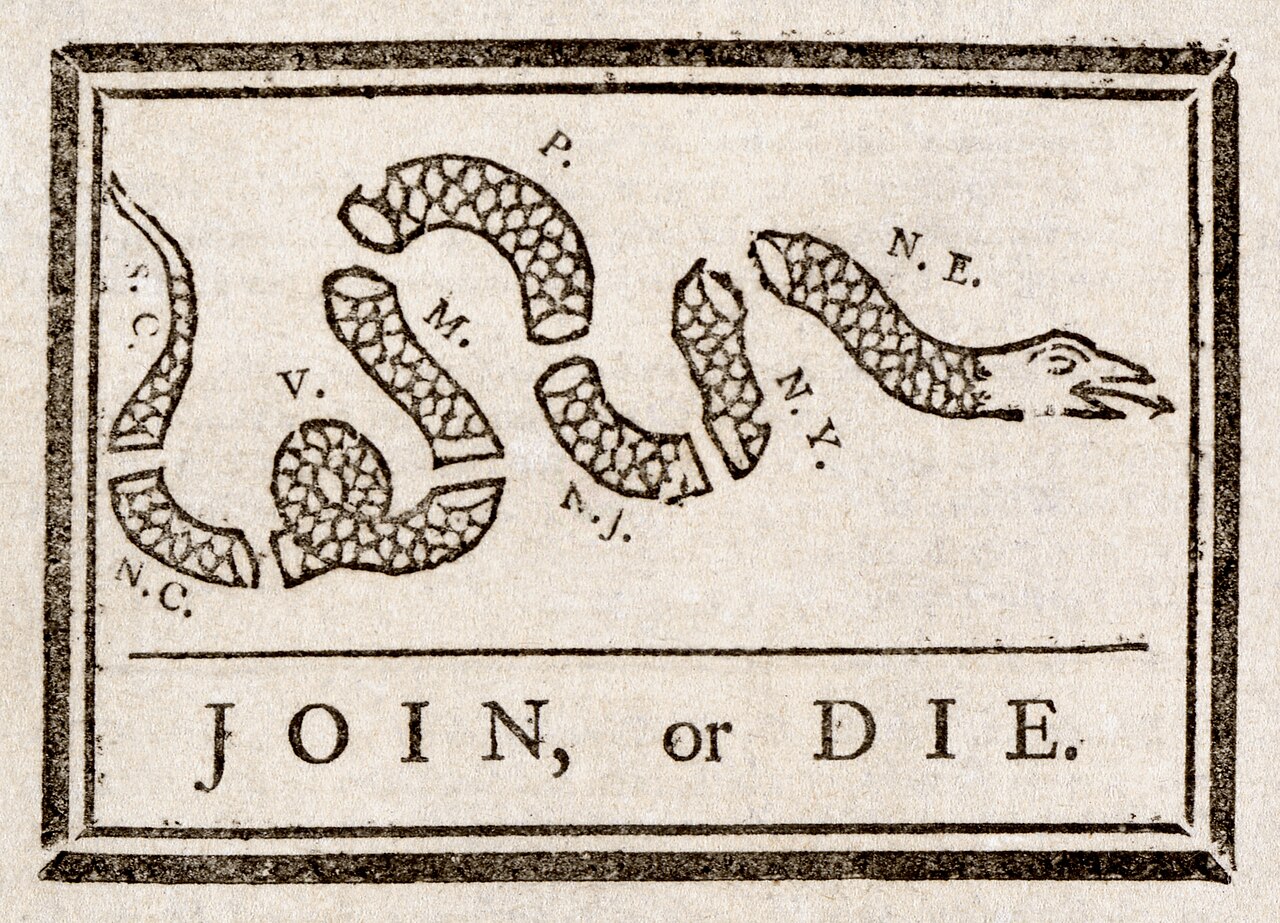
    “We must, indeed, all hang together or, most assuredly, we shall all hang separately.”

    Benjamin Franklin

  • The Escalating War on Conservatives

    The Escalating War on Conservatives

    Share:


    “If ever the Time should come, when vain & aspiring Men shall possess the highest Seats in Government, our Country will stand in Need of its experienced Patriots to prevent its Ruin.” (Samuel Adams)

    The GOP continues to fracture and bleed as the party continues to drive out conservative politicians and voters. This shift is obvious during the primaries in who the GOP supports and in how much money they spend to defeat the conservative candidates running. Quite often they spend more to defeat the conservative candidate in the primary than they do to defeat their opponents in the general election.

    As this war on conservatism continues, it escalates. We are reminded why Howard Phillips founded the Constitution Party. He started it to be an ark for conservatives when the GOP rejected them.

    In support of that mission, and to encourage others to make the break, the Constitution Party National Committee passed the following Resolution at their recent meeting in Philadelphia on this 250th anniversary of the Declaration of Independence:


    RESOLUTION TO SEPARATE FROM THE TYRANNY OF THE DEMOCRATIC AND REPUBLICAN PARTIES


    Whereas the Democratic and Republican parties have manipulated the political systems in the United States and created a UNIPARTY to gain and maintain power and control over the rights of Citizens to further their own agenda.

    Whereas the UNIPARTY has pitted Citizens against each other for the purposes of fundraising and political theater, disturbing the domestic tranquility of the nation;

    Whereas, the UNIPARTY has consistently put the interests of corporate entities before the rights of the Citizens;

    Whereas the UNIPARTY has made claims of owning our votes and has used psyops to indoctrinate the public into believing that voting for someone not approved by the UNIPARTY is wrong and harmful.

    Whereas the UNIPARTY no longer represents We the People, nor protects our rights;

    Be it Resolved, That we Citizens and Voters are, and have a right to be, free and independent in our voting, that we are absolved from all allegiance to the UNIPARTY, and that all political connection between them and the Citizens and Voters of these united States is, and ought to be, totally dissolved to maintain our constitutional governance.


    The Declaration of Independence from the Two-Party System: May 16, 2026

    When, in the course of human events, it becomes necessary for the people of a nation to break free from the political structures that no longer serve them, and to reclaim their rightful power as citizens, respect for the opinions of the Nation demands that they explain why.

    We hold these truths to be self-evident: that all people are created equal; that they are endowed by their Creator with certain inalienable rights — including life, liberty, and the pursuit of happiness. That governments, and the political systems that shape them, exist to protect these rights, deriving their just power from the consent of the governed. That whenever a political system becomes corrupt, entrenched, and destructive of these ends, it is the right of the people to alter or abolish it, and to establish new systems that better reflect their needs, values, and hopes.

    Prudence indeed will dictate that political systems long established should not be changed for light or fleeting causes; and experience has shown that people are often more willing to endure frustrations and disappointments than to challenge deeply rooted systems. But when a long train of abuses and failures shows a clear pattern of placing party loyalty, corporate interests, and political survival over the rights of individuals, it is the right — it is the duty — of the people to throw off such systems, and to create new political pathways for their future.

    • They have entrenched a two-party monopoly that stifles competition, suppresses alternative voices, and denies voters meaningful choice.
    • They have fueled bitter polarization, dividing communities, families, and the nation, not for the people’s benefit, but for their own political gain.
    • They have prioritized corporate donors and special interests over the needs of working people, and small businesses.
    • They have acted unconstitutionally on unsubstantiated threats like climate change, economic inequality, healthcare access, and gun violence, to limit individual freedom.
    • They have undermined trust in our republican form of government by gerrymandering, facilitating voter fraud, and introducing reforms like ranked-choice voting and campaign finance fraud.
    • They have made performative gestures while avoiding meaningful structural change, focusing on political point-scoring instead of solving problems.
    • They have weaponized fear, misinformation, and media echo chambers to manipulate public opinion and cling to power.
    • They have made it nearly impossible for independent or third-party candidates to compete on a level playing field, locking the system to their advantage.

    We have called upon them, time and again, to reform — to open the political process, to listen to the voices of the people, to place country over party. But they have responded with gridlock, empty promises, or further entrenchment. A political establishment that refuses accountability and change is no longer fit to lead a free people.

    We, therefore, the independent citizens of the United States, do solemnly declare that we are free and independent from the Democratic and Republican Parties — that we do not recognize any monopoly they think they have over our lives; that we claim the right to build new parties and movements, to support independent candidates, and to restore our republic to truly reflect constitutional principles.

    And for the support of this declaration, with firm reliance on the principles of justice, equality, and self-determination, we mutually pledge to each other our time, our energy, and our unwavering commitment to a better future.

    Declaration of Independence from the Two-Party System (PDF)

  • Reflecting on the Spirit of America

    Reflecting on the Spirit of America

    Share:


    Throughout this 250th Anniversary year, we challenge everyone to consider those who founded this country. Take a deep look; not just at the famous founders, but at the everyday men and women who made this country. There were folks working at every level of government to bring about this new understanding and new form of government.

    These folks were independent and strong, deciding their future and making it happen. They literally carved new communities out of forest and wilderness. They started new businesses and discovered new resources. They aided each other and supported community.

    Even those in States that were not of the original thirteen have their stories of the original settlors. Stories of self-reliance and resilience as they carved out large permanent communities in the rugged wilderness. Stories of heroes of self-governance and of the journey to Statehood.

    We challenge you to look for these stories (they should be easy to find this year) and to take courage and inspiration from their journeys. We challenge you to look openly and honestly at our history and to learn from past mistakes. And above all, we challenge you to look at the things that made us a beacon of Liberty and Freedom and that created the phenomenon of the American Dream.

  • Party leaders demand unconditional submission to the supremacy of the DEMGOP

    Party leaders demand unconditional submission to the supremacy of the DEMGOP

    Share:


    Election after election the Democratic and Republican politicians make promises and say the things their voters want to hear. And year after year, once the elections are over, the DEMGOP party takes more of our freedoms, more of our money, and more of our future.

    They destroy the value of our currency while using insider trading to get rich. They bring more restrictions and more taxes. And all the while the national debt is climbing at an alarming and unmitigated rate.

    It is time for our fellow citizens to wake up to the fact that there is no saving the two old dying parties. We must either resist them completely, or surrender unconditionally to them.

    Dr. Emily Sneff’s Declaration Story for today bares out the same dilemma from the American Revolution.

    Dunlap’s Pennsylvania Packet or the General Advertiser
    Printed by John Dunlap

    To the free and independent ELECTORS of the City of PHILADELPHIA.
    Gentlemen,

    WERE any words capable of expressing the importance of exerting yourselves to maintain the character I have addressed you by, I could wish from the bottom of my heart to find them and set them in due order before you. I tremble to reflect what a party there is in this city, who either in plain words or tantamount insinuations espouse the cause of tyranny. You have read their insidious publications: You have remarked their zeal for a reconciliation and re-union with Great-Britain on constitutional principles. This proposal, Gentlemen, is a mere phantom, a lure, a pitfal to catch you in. In the first place, no man ever did or can shew what this constitutional dependence on Great-Britain is, or can be, which will secure our liberties: And in the second place no terms have been, nor at all probably will be offered us, besides those of unconditional submission to the supremacy of the Parliament in all cases whatsoever. Certainly no better have appeared from the other side the water, and when pressed on the subject, the sticklers for reconciliation acknowledge they know of no other, and yet urge you to maintain our connexion with Great-Britain upon the best terms we can obtain. If such men are not advocates for absolute tyranny, I have no conception of the meaning of the words. To be commercially connected with our friends in Great-Britain would doubtless be very pleasing to us all; but to be subject to the destroyers of British as well as American Liberty, is what none but an ignorant slave, or an insidious tool, would propose and strive to persuade you.

    The Constitution of this province is the Shiboleth of this very loyal party. Every sensible man must know that the King of Great-Britain had so material a share in the government of this province, that the legislative nor executive powers in it can proceed one ace without him; and well did a worthy Grand juror object to enquiring any thing respecting the Crown and Dignity of a man who has rendered the idea of a Crown detestable to the whole Western World. The Constitution is therefore (by the breach of royal faith in refusing to govern according to solemn compact with all his people) broken to pieces, and the Committee of Inspection were greatly right in proposing to call a Convention to take the state of the province into consideration. It is easy to judge from what quarter the proposal for a more equal representation at last came. It was concluded this manœuvre would have a tendency to quiet the people by taking one of the most unanswerable objections to the present administration out of their mouths. You cannot, however, forget that this partial redress was a very late one, and only conceded to prevent a radical reformation.

    The Patriots, notwithstanding, persuaded themselves that in the then critical situation of affairs, it was best to acquiesce in a measure which they hoped would keep us united, rather than risque a dissension in the too violent opposition to rooted prejudices, which was necessary to clear the way for the re-establishment of a real free Constitution, on the only firm basis of our Anglo Saxon ancestors. But remember, fellow citizens, that in the transaction of May first, you are to consider yourselves as rather acting upon a renewed system, than with too scrupulous attention to any unreasonable custom that may have crept into your old one. On this head you will suffer me to be something particular. The custom has been to deny the right of voting to all persons who have come from Germany, &c. until they have been naturalized, and taken such oaths as men now-a-days much object to; and what seems peculiar to this city alone, all men below the estate of fifty pounds are precluded. Now I must profess myself of the Forester’s opinion, that every man in the country who manifests a disposition to venture his all for the defence of its Liberty, should have a voice in its Councils. Persons so abject as to have neither will nor sentiment of their own, are readily distinguished, and cannot give much trouble. Burgesses, according to the excellent author of an Historical Essay on the English Constitution, “were elected by every resident inhabitant that paid his shot, and bore his lot.” p. 28. This I will affirm is the ancient, free Constitution, which every honest man will venture his blood to restore. “There were three things,” says the same author in the next page, “essentially necessary to form a Saxon Government, which they applied to every case where a combined interest was concerned; and these were, a Court of Council, a Court of Law, and a Chief Magistrate. A Court of Council, to consider what was for the benefit of the whole society.” Now such a Court of Council can hardly be expected from a Qualification Law like that of Queen Ann, vesting the elective power only in the hands of the opulent. To such a pernicious partiality it is owing that the poor in England are loaded with Excises on the indispensible necessaries of life. Every man who pays his shot and bears his lot is naturally and constitutionally an Elector in a city: And more especially I will affirm, that every citizen who has armed and associated to defend the Commonwealth is, and should be an Elector; and every non-associator and stickler for dependency on the power that is now in actual depredation of our Rights, Liberties, and all that is dear to us, should be kept far from our Councils; and unless they very speedily mend their destructive manners, sent to the haunts of despotism, where they may mix with their congenial spirit:, and with all the gratification of his Infernal Majesty’s august Courtiers, solace themselves in constant contemplation of human misery.

    An ELECTOR.


    “But, pardon me, my fellow citizens, I know you want not zeal or fortitude. You will maintain your rights or perish in the generous struggle. However, difficult the combat, you never will decline it when freedom is the prize.”

    Dr. Joseph Warren ~ Delivered at Boston, 6 March 1775


  • Did you know that Boston wasn’t the only “Tea Party” event?

    Did you know that Boston wasn’t the only “Tea Party” event?

    Share:


    The Boston Tea Party is a well-known event that occurred on December 16, 1773, in Boston, Massachusetts. In response to Parliament requiring the British Colonies in America to only purchase tea from the British company, colonists refused to let British tea be landed in their ports.

    While the actions in Boston are well remembered today, many don’t know that the same actions occurred in several other colonies. The New York Tea Party occurred on April 22, 1774. Unlike the Bostonians who disguised themselves, the New Yorkers did not use disguises but openly destroyed the tea that had been brought into the New York harbor.

    New Jersey, Pennsylvania, Maryland, Virginia, North Carolina, and South Carolina all have reports of the dumping or burning of the tea of the East India Company in resistance to the unconstitutional measures of king and Parliament. It became unpatriotic to drink tea to the point that even smuggled tea was suspect.

    The unity of the colonies in resisting these oppressive, protectionist measures continued through their declaring independence and through the American Revolutionary War. It is this unity against bad government that should unite Citizens today in securing individual rights.

    “But, pardon me, my fellow citizens, I know you want not zeal or fortitude. You will maintain your rights or perish in the generous struggle. However, difficult the combat, you never will decline it when freedom is the prize.”

    Dr. Joseph Warren ~ Delivered at Boston, 6 March 1775

    Find out about America’s other Tea Parties protests brought to you by Virginia 250:

    A Brewing Revolution: The Tea Party Protests