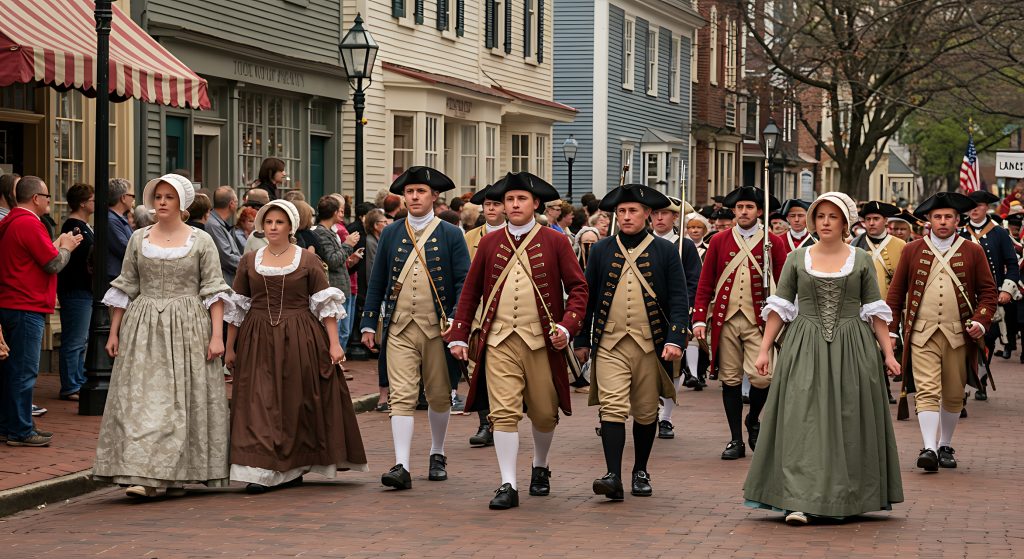
People marching in Williamsburg, Virginia.

THE FOUNDERS ROAD TO INDEPENDENCE

“A Long Train of Abuses and Usurpations”

The Founding Fathers did not jump quickly nor easily to the conclusion that America had to separate from Great Britain. The years leading up to the signing of the Declaration of Independence were filled with events that left reuniting impossible and a war for independence the only recourse. The men and women of the colonies felt these events personally and worked long and hard to form a new government to secure their individual rights. Great Britain had a history of violating rights of the common people. The American colonists recognized that now was the time and place to make a stand for Liberty.
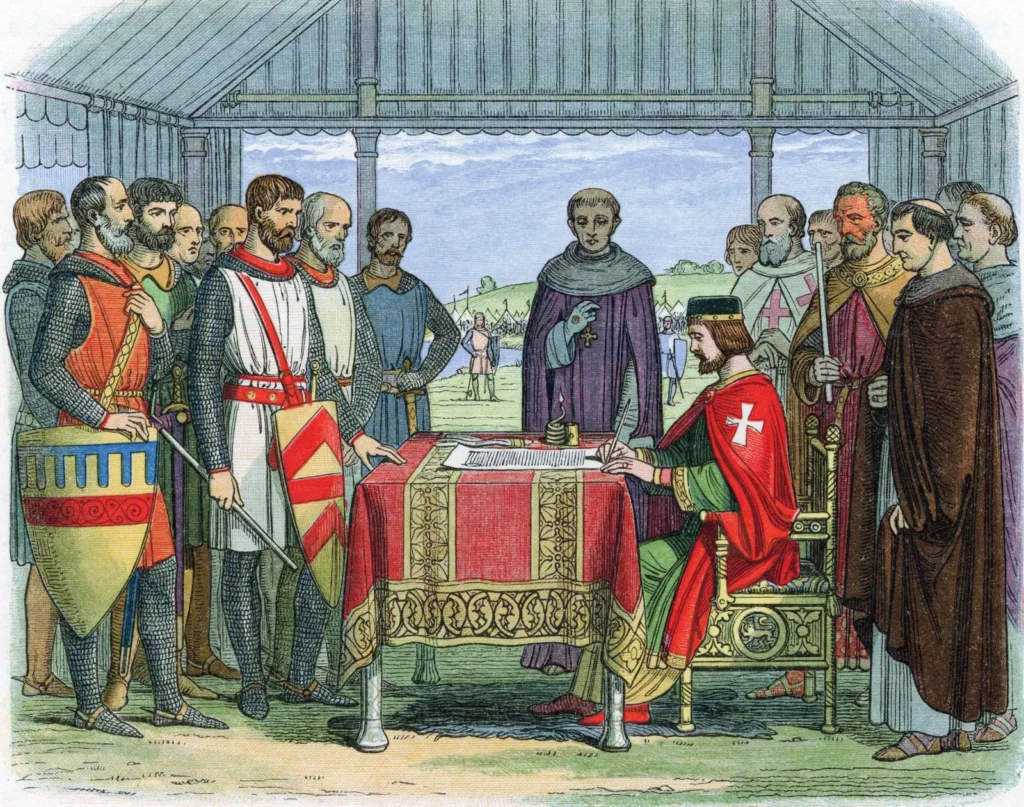
MAGNA CARTA, 1215

Key points from Magna Carta:

  1. The king could not tax people without their consent.
  2. Nobody was above the law, not even the king. 
  3. Free men had a right to a fair trial. 
  4. The church had freedom from the king. 

Video – King John and the Origins of Magna Carta

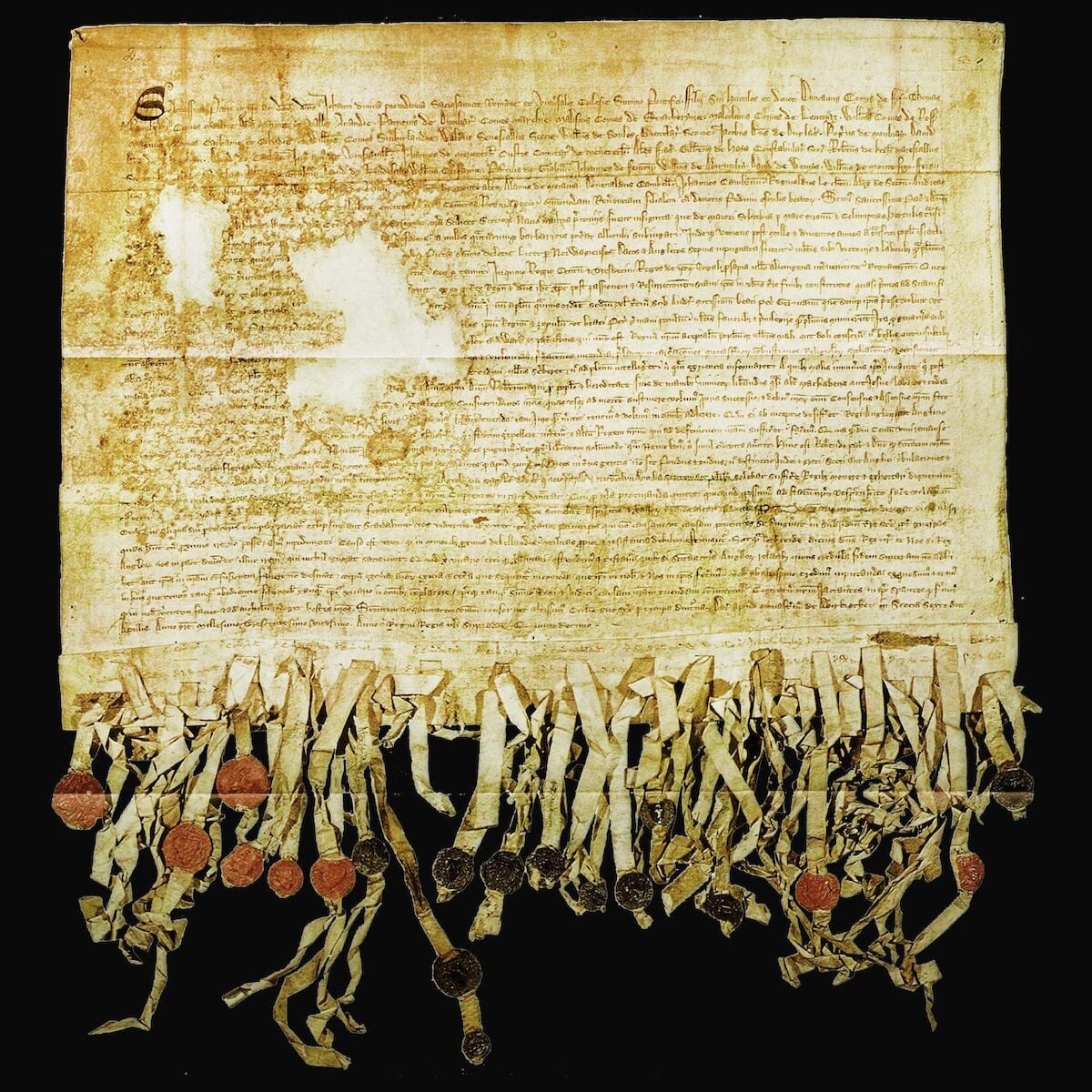
DECLARATION OF ARBROATH, 1320

In Scotland, English rule was threatening to destroy the freedom of the Scots. William Wallace, Robert the Bruce and many others made their stand and won, for a time . . .

“As long as but a hundred of us remain alive, never will we on any conditions be brought under English rule. It is in truth and for glory, nor riches nor honours that we are fighting, but for Freedom – for that alone, which no honest man gives up but with life itself.”

For Freedom Alone: The Declaration of Arbroath and the Limits of Power | Libertarianism.org
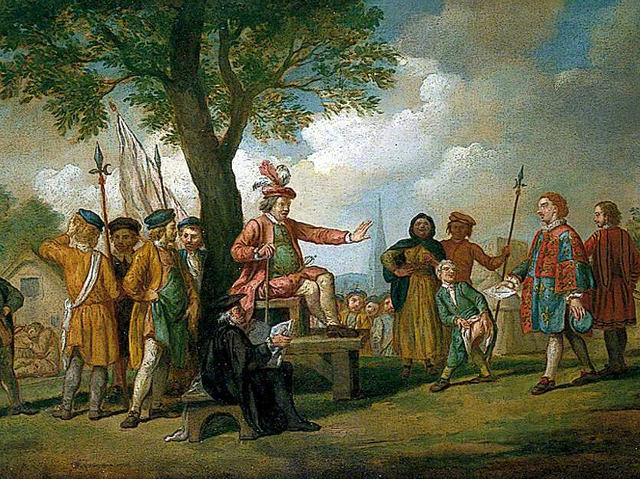
Video on the 700th anniversary of this document.

KETT’S REBELLION, 1549

Most of the British Isle colonists knew of Kett’s Rebellion, which occurred in Norwich, England. Many of his concerns were also theirs, and ours today.

  • To limit the power of the gentry (government overreach and the influence of the elitists).
  • To restrain rapid economic change (taxes, inflation, deficit spending by the government).
  • Prevent the overuse of communal resources (federal control over unconstitutionally owned public lands, which favors corporations over the common people).
  • Religious freedom in a time when religion and the state were the same thing.
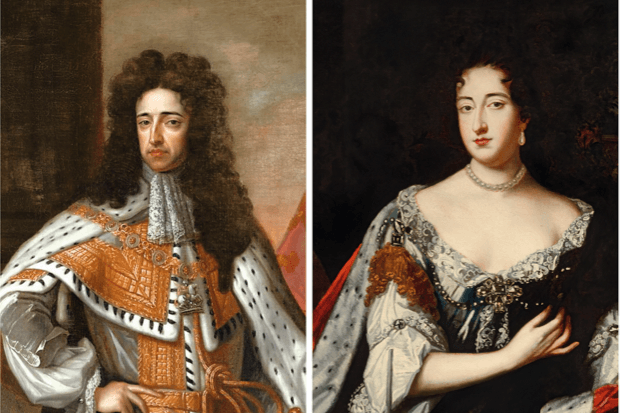
Robert Kett’s Petition, 1549 – The History of England

ENGLISH BILL OF RIGHTS, 1689

William and Mary were the royals who signed the English Bill of Rights into law. Violations of these rights was the main driver of the American Revolution.

Read more here: English Bill of Rights – Definition & Legacy | HISTORY

Video: The Ancestry of Liberty. Great summary of the history and some of the specific rights which concerned the colonists. Highly recommended!


Colonial Americans didn’t just wake up one day and decide to be independent from their homeland, Britian. They fully saw themselves as British subjects whose rights were being denied by both Parliament and the King. The operative word is “subjects”. The colonists were seen as tools to be used to enrich the King, at any cost. A citizen of an independent nation is another type of relationship. They sought to right the violations of both common law and the English Bill of Rights, and saw they could only do that by breaking away and creating a nation, with citizens, not subjects.

“We hold these truths to be self-evident, that all men are created equal, that they are endowed by their Creator with certain unalienable Rights, that among these are Life, Liberty and the pursuit of Happiness.–That to secure these rights, Governments are instituted among Men, deriving their just powers from the consent of the governed, –That whenever any Form of Government becomes destructive of these ends, it is the Right of the People to alter or to abolish it, and to institute new Government, laying its foundation on such principles and organizing its powers in such form, as to them shall seem most likely to effect their Safety and Happiness.”

The Rebellion Begins . . .

We have developed a timeline of significant events in American History between 1754 and 1790 — 36 years which changed the course of the colonies, built a nation, and eventually a global power.

Below is the first part of the Founder’s Road to Independence: 1754 – July 1776. In the right-side column, we have identified special events, Constitutional Protections and Principles of Liberty that the Founders defined, and which led to the Declaration of Independence.

Check back for part two and part three in the summer of 2026: “The War Years” and “Framing a Nation”

1754: French and Indian War + The Albany Plan of Union

MAY: French and Indian War begins on the North American Continent. On the Precipice | American Battlefield Trust


JULY: Benjamin Franklin proposes a single government for the Colonies. It is known as the Albany Plan of Union, the Albany Convention of 1754, or the Albany Congress. Albany Plan of Union 1754 | American Battlefield Trust

1759: The Battle of Quebec

SEPTEMBER: The Battle of Quebec (also known as the Battle of the Plains of Abraham). England was victorious. The French were defeated and ceded most of its North American possessions to Great Britain. Conquering a Continent: The Battle of Quebec | American Battlefield Trust

1763: The Treaty of Paris and the Proclamation of 1763

FEBRUARY: The Treaty of Paris ends the Seven Years War in Europe and the French and Indian War in North America. The national debt of England soars. The French and Indian War (1754-1763): Its Consequences | American Battlefield Trust


OCTOBER: King George III of England issues the Proclamation of 1763, which bans all colonists from settling beyond the Appalachian Mountains. It reserved that land for the Native Americans. Royal Proclamation of 1763 | American Battlefield Trust

1764: The Sugar Act

APRIL: Parliament passes the Sugar Act. Not just about taxation, smugglers could now be tried in Admiralty Courts without the benefit of a jury, which was a right secured in English Common Law. Sugar Act | American Battlefield Trust

1765: The Stamp Act, The Quartering Act, and the Virginia Resolves

MARCH: The Stamp Act. The English Parliament passed a tax on paper goods and legal documents in the colonies, without a representative voice to speak for them.


The Quartering Act. This act forced the colonies to provide food and housing for British troops.


The Virginia House of Burgesses passes the Virginia Resolves. These resolutions challenge the legality of the Stamp Act and Parliament’s right to tax. Patrick Henry led the charge. Patrick Henry’s Virginia Resolves of 1765: Spark of the Revolution | Tenth Amendment Center

OCTOBER: The Stamp Act Congress. Eight colonial assemblies gathered at Federal Hall in New York City to discuss the crisis. They drew up a Declaration of Rights and Liberties. What Was the Stamp Act Congress and Why Did It Matter | American Battlefield Trust

1766: The Declaratory Act

MARCH: Parliament passes The Declaratory Act. This repeals the Stamp Act and its authority over the colonies. Declaratory Act | Effects & Significance | Britannica

1767: Letters From a Farmer and the Townsend Acts

Twelve letters penned by John Dickinson opposing Parliamentary actions are published in the years 1767 and 1768. Letters From a Farmer in Pennsylvania – Division of Historical and Cultural Affairs – State of Delaware


JUNE/JULY: The Townshend Acts. These were a series of Acts passed by Parliament which concerned the taxing of goods imported from Great Britain. This included tea, glass, paper, and dyestuffs. The purposes of the acts were to raise revenue, enforce compliance with trade regulations and to punish New York for refusing to comply with the 1765 Quartering Act, and establish the precedent that the British Parliament had the right to tax the colonies.

1768: Massachusetts and a New Secretary of State for the Colonies

FEBRUARY: Massachusetts Assembly issues the Massachusetts Circular Letter denouncing the Townshend Acts.


AUGUST: Boston Non-Importation Agreement in which Boston merchants agree to not import British goods, nor to sell to Britain.


JUNE: Riots broke out as a result of the Liberty Affair. The Liberty was a sloop owned by John Hancock which had previously been accused of smuggling wine. Other events this year:

  • Bostonians refused to quarter British troops.
  • Parliament appointed a Secretary of State for Colonies.
  • The Massachusetts Assembly was dissolved for refusing to assist collection of taxes.

1769: Virginia Assembly

The Virginia House of Burgess (Assembly) was dissolved following a protest against colonial treason trials held in Westminster.

1770: Boston Massacre and the Golden Hill Riot

JANUARY: The Golden Hill Riot breaks out in New York. Also known as the “Battle of Golden Hill”; it is one in a series of violent protests by the colonists.


MARCH: The Boston Massacre is a confrontation between colonists and nine British soldiers which leaves 6 colonists wounded and 5 dead.


Parliament repeals taxes on paper, glass, and dyestuffs; but retains the tax on tea.

1772: The Gaspee Affair and Committees of Correspondence

JUNE: The Boston Assembly demands the rights of colonies and threatens succession.


A British ship called the Gaspee runs aground in Rhode Island while patrolling for smugglers. A local mob burns it and participants are later accused of treason. (see timeline on the right).


Samuel Adams forms Committees of Correspondence in Massachusetts, organized to take action against Great Britain.

1773: The Boston Tea Party

MAY: The Tea Act was an attempt by Parliament to undercut smugglers by reducing the price of tea to the colonies.


DECEMBER: Boston Sons of Liberty dump 342 chests of tea (from three ships) into the Boston Harbor; and the Virginia House of Burgesses appoints Provincial Committee of Correspondence.

1774: Escalation

JANUARY: New York and New Jersey establish Committees of Correspondence. Colonists publicly tar and feather customs officer John Malcolm. Benjamin Franklin is accused of “leaking” private letters from Governor Thomas Hutchison who was reporting on the Boston Tea Party. Massachusetts Assembly demands removal of Governor Thomas Hutchinson; these demands are ignored.


FEBRUARY: The Coercive Acts or Intolerable Acts were a series of laws in response to Boston Tea Party. These are the Boston Port Act, Massachusetts Government Act, Administration of Justice Act, Quartering Act, and Quebec Act.

MARCH: Governor Thomas Hutchinson dissolves the Massachusetts Assembly.


APRIL: The Sons of Liberty dump East India Company tea from the ship London into the New York Harbor.
In the Logan’s Creek, Virginia Raid, frontiersmen killed a group of Indians; retaliation leads to Lord Dunmore’s War.


MAY: Mob burns effigies of Governor Thomas Hutchinson and Solicitor General Alexander Wedderburn for their handling of the Hutchinson Letters Affair. Boston Committee of Commerce calls for non-importation of British goods until Tea Act and Boston Port Act are repealed. General Thomas Gage (and four infantry regiments) arrive in Boston; Gage is Commander-in-Chief of British forces and replaces Hutchinson as Royal Governor of Massachusetts. Rhode Island requests the organization of an intercolonial body to challenge the Intolerable Acts; this request leads to the First Continental Congress.


Massachusetts Government Act and Administration of Justice Act annulled the Massachusetts Charter gives more authority to Royal Governor (now General Thomas Gage); replaces the elected Governor’s Council with governor-appointed Mandamus Councilors; authorizes the governor to move trials of British officials accused of committing capital crimes (while performing their duties) to another colony or to Britain if he believed a fair trial would not occur; also, town meetings were not permitted without consent of Royal Governor.


Virginia Governor John Murray, Lord Dunmore dissolves the Virginia Assembly. It was the first representative government in the North America colonies, having been established in 1619.


The just dissolved Virginia Assembly meets at Raleigh Tavern in Williamsport to call for an intercolonial congress, express support for Massachusetts, and advocate for economic retaliation; they agree to reconvene on August 1, 1774, for what is now known as the Virginia Convention.


JUNE: The Quartering Act is amended and expanded to all colonies; requiring them to provide provisions and housing for British soldiers; allowing a governor to seize unused buildings as necessary.


Solemn League and Covenant leader Joseph Warren publishes an agreement calling for towns and merchants to stop all trade with Great Britian; this is a precursor to the Continental Association.


Massachusetts Assembly meeting in Salem and approves a resolution calling for an intercolonial congress and choose delegates.


Lord Dunmore (Governor of Virgina) calls out militia in response to Shawnee uprising on frontier. In response, Governor (General) Gage suspends the Assembly. Samuel Adams convenes a Boston Town Meeting to discuss paying for tea destroyed in Boston Tea Party the colonists vote against paying for the tea.


Rhode Island selects delegates to the First Continental Congress.


King George gives assent to Quebec Act, which formed a formal government in Canada and guaranteed religious freedom in Canada, ensuring that the Roman Catholic Church would continue. Colonists were particularly angry that the act enlarged Quebec Province to the Mississippi and Ohio Rivers, eliminating territories claimed by Massachusetts, Connecticut, and Virginia.


JULY: Maryland, New Hampshire, Pennsylvania, and New Jersey select delegates to the First Continental Congress.


AUGUST: Delaware, Virginia, South Carolina, Connecticut, and North Carolina select delegates to First Continental Congress. The Virginia Association establishes a non-importation agreement that prohibits Virginia merchants from importing goods from British. Georgia declines to send representatives to First Continental Congress; instead, they adopt a Declaration of Rights.


Considerations on the Nature and Extent of the Legislative Authority of the British Parliament published; written by James Wilson, a Philadelphia lawyer, this document asserted the American colonies were separate political entities under the British Crown and, thus, were not subject to direct Parliamentary control.


SEPTEMBER: The Massachusetts Powder Alarm. General (Governor) Gage sends 260 Redcoats to seize 250 barrels of gunpowder in Somerville (six miles from Boston); the gunpowder is taken to Boston and rumors spread that British had attacked Boston and were burning the city. In response, thousands of Massachusetts militia gather at Cambridge; before dispersing, they force some of the appointed Mandamus Councilors to either refuse their positions or resign.


General Gage orders his troops to build defensive fortifications at Boston Neck to secure the city and protect it against another mass gathering of Massachusetts militia forces. First Continental Congress adopts Suffolk Resolves as its first official action; and orders the document to be printed in colonial newspapers. They reject the Galloway Plan of Union.


OCTOBER: British attacks and burn the coastal towns of Falmouth, Massachusetts and Norfolk, Virginia; and the Virigina militia defeats native forces at Point Pleasant, in what is now West Virginia, ending Lord Dunmore’s War; and The tea ship “Peggy Stewart” is burned at Annapolis, Maryland in the Annapolis Tea Party event.


The First Continental Congress adopts the “Declaration of Rights and Grievances” and approves the formal “Humble Petition to the King”; and a “Letter to the Inhabitants of the Province of Quebec,” calling on Quebec to join the colonial cause. It adjourns on 26th of October.


Philadelphia Troop of Light Horse organized, one of the first colonial military units and was comprised of twenty-six men and horses; and colonists seize a cache of British weapons at Newport, Rhode Island and take them to Providence.


Capture of Fort William and Mary in Portsmouth: New Hampshire when the colonists learn that the British were planning to raid another colonial supply deport. They take the initiative and storm the Fort, seizing gunpowder and canons. The supplies are used to arm the New Hampshire militia as well as used in the Battle of Bunker Hill. During the battle, the British colors were lowered, marking the first time Americans had lowered the British flag at a fort.

1775: Determination and Preparedness

MARCH:


APRIL: The Midnight Rides of Paul Revere and William Dawes.


The Battles of Lexington and Concord were the first attempts to disarm Americans on their home territory.


MAY: Ethan Allen and the Green Mountain Boys seize Fort Ticonderoga in New York. Canons are taken to Boston, and the Second Continental Congress convenes.


JUNE: Continental Army is established on June 14th. George Washington is appointed Commander-in-Chief in Philadelphia.


The Battle of Bunker Hill in Boston.


JULY: George Washington arrives in Cambridge, Massachusetts, and assumes command of the Continental Army.


“Declaration of the Causes and Necessity of Taking Up Arms“, was passed by Congress. It is a resolution written by Thomas Jefferson, which explained why the colonies had gone to war.


SEPTEMBER: Colonel Bendict Arnold begins the invasion of Canada through Maine.


OCTOBER: Continental Navy is established on the 13th.


NOVEMBER: Continental Marine Corps established on the 10th. The Americans capture Montreal in Canada under the command of General Richard Montgomery and General Benedict Arnold, and the First Siege of Ninety Six in South Carolina under the command of Major General Nathaniel Greene.

DECEMBER: In the Battle of Great Bridge, Americans seized Norfolk, Virginia and took control from Lord Dunmore, under the command of Colonel William Woodford.


At the Battle of Great Cane Brake, South Carolina, the Patriots, led by Colonel Richard Richardson, and Major William “Danger” Thomson waged a successful campaign against Loyalists in the colony.


The “Snow Campaign was a 30-hour march through heavy snow, sleet, and rain for Colonel Richardson’s forces as they returned to the coast of South Carolina.


Americans lose the Battle for Quebec at a great loss, including the death of General Richard Montgomery and Great Britain hires 29,000 Hessian soldiers sent to support Britain by their German rulers.

1776: No Turning Back

JANUARY: Benjamin Franklin drafts a plan of union basing representation in congress and contribution to the common treasury on based the male population called “Articles of Confederation and Perpetual Union”, and Thomas Paine publishes his pamphlet, “Common Sense”.


FEBRUARY: The first significant victory for the Patriots. Loyalist forces charged across a partially dismantled Moores Creek Bridge in North Carolina. Nearly 1,000 Americans waited quietly with cannons and muskets poised to fire. This battle marked the last broadsword charge by the famous Scottish Highlanders.


MARCH: The Battle of Nassau, Bahamas, tested the new Continental Navy and Marine forces. A victory that saw the first Marine Corps amphibious assault and the first an American flag was raised over a foreign stronghold, and the British forces evacuate Boston, Massachusetts.


APRIL: North Carolina becomes the first colony to authorize its delegates to vote for independence when it passes the Halifax Resolves.


MAY: Congress passed a resolution urging each state to give its delegates authority to vote for independence


JUNE: Virgina Delegate Richard Henry Lee proposes independence to the Second Continental Congress, known as the “Lee Resolution” .


The Second Continental Congress appoints the “Committee of Five” to draft a declaration of independence; the committee includes Thomas Jefferson, John Adams, Benjamin Franklin, Roger Sherman, and Robert R. Livingston.  Seventeen days later they present a draft resolution.


Battle of Sullivan’s Island, South Carolina became the first decisive defeat of the British Navy by the Americans. Sullivan’s Island Battle Facts and Summary | American Battlefield Trust


Cherokee Nation begin their attacks on the southern frontier.


The Second Constitutional Congress passes the Lee Resolution after two attempts, which opens the door to an official declaration of independence.


JULY 1: Debates on the content of the Declaration of Independence begin.


JULY 2: The Second Continental Congress adopts the Declaration of Independence. and prints about 200 copies. Less than 30 survive today.


JULY 5: Copies of Declaration of Independence are sent to various committees, assemblies, and to commanders of the Continental troops.


JULY 6: Declaration of Independence is printed in a newspaper for the first – Pennsylvania Evening Post.


JULY 8: Colonel John Nixon gives the first public reading of the Declaration of Independence to a crowd on State House Yard (now Independence Square).


JULY 19: The Second Continental Congress orders the Declaration engrossed for signatures. They change the title from “A Declaration by the Representatives of the United States of America in General Congress Assembled” to “The Unanimous Declaration of the Thirteen United States of America”.


AUGUST 2: The final Declaration is signed by 50 of the 56 signers; five more will sign later in 1776. Thomas McKean, signs sometime after that. Only one handwritten, signed Declaration of Independence remains today, which is on display in the National Archives located in Washington, District of Columbia.

CONSTITUTIONAL PROTECTION: The Fifth, Sixth, and Seventh Amendments

  • Right to a Grand Jury;
  • Right to a speedy and public trial;
  • Right to an impartial jury residing in the state and district where the crime occurred;
  • Right to be informed of the nature and cause of the accusations against the person in custody;
  • Right to confront prosecution witnesses;
  • Right to compel witnesses for the defense to appear;
  • Right to a lawyer;
  • Right to a jury trial in civil cases;
  • Right to protect jury decisions from being overturned by a judge unless Common Law rules are applied.
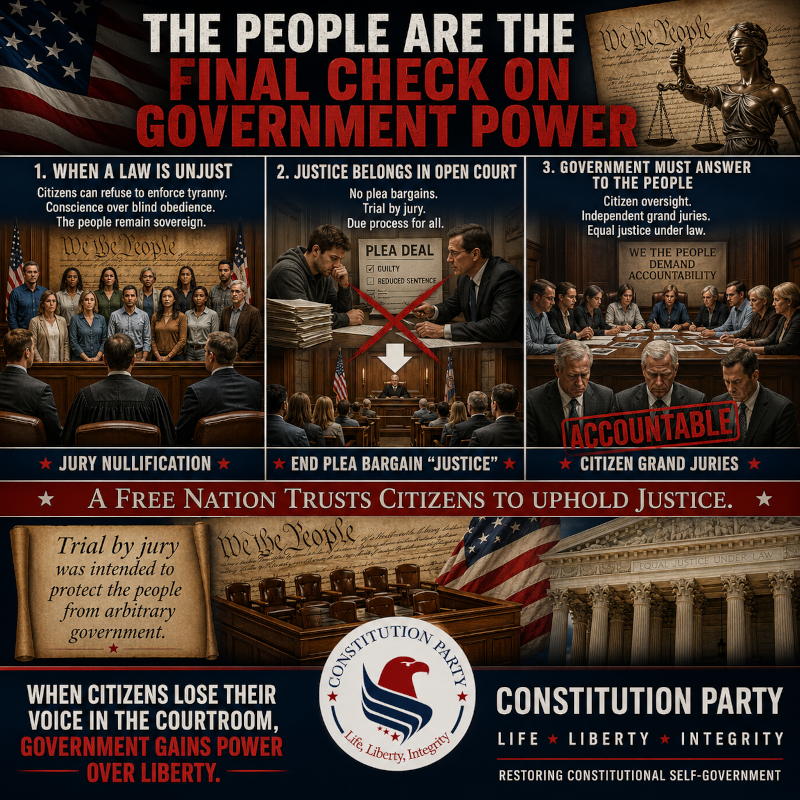
CONSTITUTION PARTY

CONSTITUTION PARTY ON THE JUDICIARY and CRIME

CONSTITUTIONAL PROTECTION: Taxation With Representation


“The Congress shall have Power To lay and collect Taxes, Duties, Imposts and Excises, to pay the Debts and provide for the common Defence and general Welfare of the United States; but all Duties, Imposts and Excises shall be uniform throughout the United States;”

CONSTITUTON PARTY

CONSTITUTONAL PROTECTION: The Third Amendment


No Soldier shall, in time of peace be quartered in any house, without the consent of the Owner, nor in time of war, but in a manner to be prescribed by law.

PRINCIPLE OF LIBERTY: Unjust Laws and Non-Compliance

CONSITUTION PARTY

CONSTITUTION PARTY ON CIVIL DISOBEDIENCE

The Spark that lit the Revolution

The Oppression Grows

The Other Tea Parties

PRINCIPLE OF LIBERTY: First Continental Congress

PRINCIPLE OF LIBERTY: Religious Freedom

Religious Freedom in the Colonies: A Legal History

CONSTITUTION PARTY

CONSTITUTION PARTY ON RELIGIOUS FREEDOM

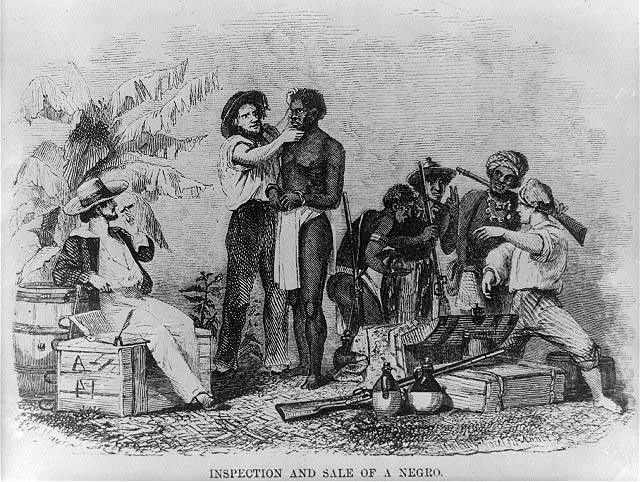
PRINCIPLE OF LIBERTY: First Attempt to Ban Slavery in the Colonies
PRINCIPLE OF LIBERTY: Liberty is Worth Dying For

PRINCIPLE OF LIBERTY: All Hands On Deck

The British Are Coming! The British Are Coming!

PRINCIPLE OF LIBERTY: Liberty for All or Liberty for None

PRINCIPLE OF LIBERTY: Try Every Opportunity for Peace

FOUNDERS GET AN EDUCATION: Finances

CONSTITUTION PARTY

THE CONSTITUTION PARTY ON MONEY AND BANKING

PRINCIPLE OF LIBERTY: United We Stand, Divided We Fall

THE SIGNING OF THE DECLARATION OF INDEPENDENCE

LEARN MORE ABOUT THE SIGNERS OF THE DECLARATION OF INDEPENDENCE

PARTICIPATE IN THE DECLARATION CHALLENGE